
If you are a fan of sport fishing, you may need to know what they are the best fishing rods and what features you should consider to make the right purchase. This expanded guide aims to give you the most complete overview possible about What does a fishing rod need to be good?How to choose it according to the fishing method, the type de peces and your experience, and which options are more interesting in terms of value for money.
This buying guide will be very useful and you'll surely consult it often to increase your knowledge , avoid beginner mistakes, and get the most out of your equipment.
What does a fishing rod need to be really good?

The fishing rod is the most important piece of fishing equipment : everything revolves around it. Choosing the right one will make all the difference between enjoying every day or being frustrated by inaccurate casts, constant snags, and lost fish. First and foremost, it's essential to know what type of sport fishing you're going to do, because fishing in brackish water is not the same as fishing in freshwater , casting from the beach is not the same as float fishing in a narrow river, or trolling from a boat.
The fishing style is important in determining the type of rod you'll be using. There are mid-range, entry-level, and high-end rods, and they come in all sorts of configurations: longer or shorter, fast or slow action, light or heavy power, telescopic or plug-in…
The quality of fishing rods depends largely on the components they are made of . Together, all these materials will determine the quality of the rod. There are three key factors in determining whether a fishing rod is good or not:
- The type of material each component is made ofIf these materials are not of good quality, the final rod will not be either. Ideally, the most important components (blank, guides, reel seat) should be made of high quality and the less critical accessories can be made simpler to adjust the final price.
- The ergonomic quality of the shaftFactors such as the following play a role here: comfort when holding it, the equilibrium with the reel, the overall weight It can withstand stress without tiring you out, and the flex is distributed along the rod. These characteristics determine whether fishing is more efficient or becomes a very tiring task.
- Reel typeThis is an aspect that the fisherman will have to decide. We must choose one that is fit the cane well (in size, weight and line capacity) and that forms a balanced combination for the type of fishing we practice.
Although fishing rods were previously made of bamboo, this entailed additional costs and greater environmental damage. Therefore, modern fishing rods are primarily manufactured from fiberglass and carbon fiber , which can withstand more weight, are more flexible, and require less maintenance.
Among modern materials, designations such as Ton (24T, 30T, 36T…) or IM (IM6, IM7, IM8…) are used to indicate the graphite's modulus , that is, its rigidity and responsiveness. A higher modulus generally makes the rod lighter and more sensitive , although it is also somewhat more susceptible to damage from impacts.
In general terms:
- La fiberglass (solid or hollow) is more economical, very resistant to impacts and suitable for beginner rods or hard use.
- El carbon or graphite offers greater reaction and a better weight/resistance ratio, ideal for modern spinning, surfcasting or jigging rods.
- The gray hair compound They combine fiberglass and carbon fiber to find a balance between sensitivity, strength and price.
Tips for choosing your fishing rod step by step

Before entering a store or searching online, it's a good idea to answer several key questions that will help you refine your choice and avoid making the wrong purchase. Many experienced anglers agree that choosing the right rod is the starting point for all your equipment.
The first, is to know what types de peces you want to captureThis is important because many factors depend on it: the rod's power, the range of action (weight of lures or weights), the type of line, and the robustness of the guides. It's not the same going in search of de peces small in size rather than large predators or carp weighing many kilos.
It's very helpful to know and research the species that inhabit the nearby areas , for example, by looking up the most prized species in sport fishing , to know which fish you'll be catching regularly. If you're a beginner, it's highly recommended that you first focus on one type of fishing and a few species (for example, trout in rivers, gilthead bream from the beach, or black bass in reservoirs) and, with experience, gradually expand your range.
The second piece of advice is to familiarize yourself with the rod's features that will suit you best . Depending on your fishing style and habits, certain handle types, rod lengths, and guide configurations will be more comfortable than others. A fishing rod has numerous components, including guides, the tip, the handle, the reel seat, the butt, and so on. The more you know about fishing rods, the more precise you'll be in choosing the best one for you.
Related to what we've discussed before is knowing what type of fishing you're going to do : from the beach, from a boat, on rocks, from a breakwater, in marshes or small rivers, vertical fishing, float fishing, jigging from a boat, rockfishing… Depending on the type of fishing you'll be doing most often, you'll be able to make much better choices.
It is also important that you consider aspects such as:
- Long JumpShort rods (1,80-2,40 m) offer more precision and control in confined spaces; long rods (3-4,50 m) are better for long casts from beaches, breakwaters, or wide rivers.
- WeightIt should never exceed your physical capabilities. If you're going to be fishing for many hours, casting and retrieving, a rod is essential. light and well balanced.
- AGENDA y powerThe action indicates where the cane bends (fast, medium, slow) and power, how much force can it withstand without breaking (ultralight, light, medium, heavy…). A bad choice will mean you won't feel the bites properly or you'll be putting too much strain on the rod.
Last but not least is the budget . The rest of the advice becomes irrelevant if your budget doesn't allow for it. Fishing is both a sport and a hobby, and we can't always invest large sums. Ideally, you should choose equipment that matches your level of commitment : if you only go out a few times a year, you can opt for a mid-range or basic setup; if you fish frequently, a good quality carbon rod with reliable guides will pay off in the long run.

Parts of a fishing rod and key technical characteristics
Knowing the parts of a fishing rod helps you better understand its specifications and assess the real quality of each model.
- Blank or rodThe shaft is the main body of the rod. It can be made of fiberglass, carbon fiber, or composite materials. Its design determines the action, power and sensitivity.
- Rings or guidesThese guides lead the line from the reel to the rod tip. They distribute tension along the entire rod, help to make longer casts, and reduce line friction. It's important that they are made of... abrasion-resistant materials (ceramic, SIC, titanium) and corrosion in the case of fishing at sea.
- Pointer: is the last ring and the thinnest section of the rod. It transmits bites and determines sensitivity. In surfcasting, for example, very sensitive hybrid tips are preferred; for rock fishing, more robust tubular tips are preferred.
- Handle or gripThis is the part where the rod is attached. It's usually made of cork or EVA foam. It should offer good ergonomics, comfortable grip and a size appropriate to the type of fishing.
- Reel holderThe reel seat is the mounting point where the reel rests. This can be threaded, rack and pinion, or secured with screws and bolts. A good reel seat provides... safety and balance.
- HeadThis is the rear butt of the rod. It provides strength at the points of contact and, on fighting rods, may include... crossbar for combat belt.
Many modern rod blanks will show markings such as 10-30g or 20-60g action , indicating the weight range of lures or weights the rod can handle effectively. Choosing a rod outside this range can lead to ineffective casts and even breakage.
Regarding resistance , people often talk about canes:
- Ultra-light: for small fish and very light lures.
- Light y tights: widely used in coastal spinning, trout, bass, light carp fishing.
- Heavy y ultra-heavy: for large species, demanding surfcasting, deep jigging or trolling.
Choosing an inappropriate resistance for the species we are targeting will cause us to not perceive the bites correctly or to put excessive strain on the rod and reel during the fight with the fish.
Types of fishing rods according to the fishing method

There are many different types of sport fishing, and each type requires a different kind of rod . Choosing the right rod for the specific type of fishing is essential for comfortable and effective fishing.
Fishing rods for the sea

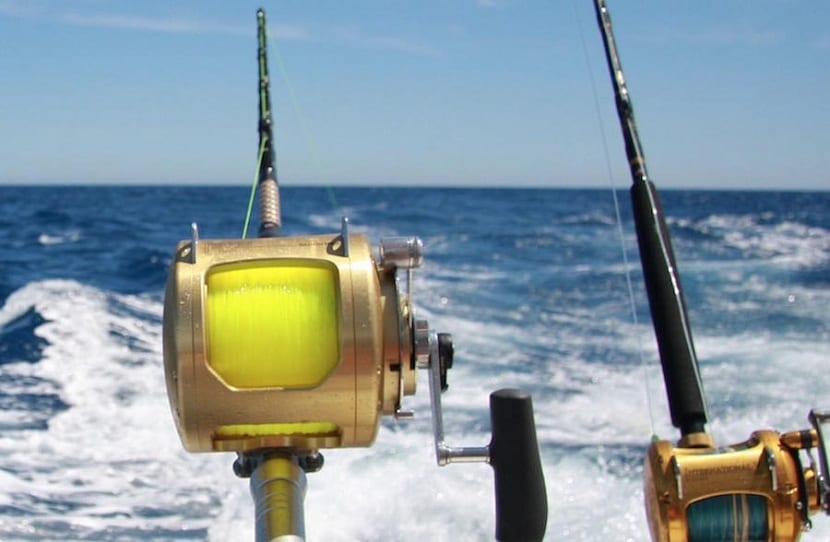
We begin with sea fishing. These types of rods are typically more durable and powerful , as they must withstand ocean currents, waves, and the fight with larger fish, such as amberjack . These rods are available in numerous models and lengths, including telescopic and plug-in versions.
These rods differ from other freshwater rods mainly in the handle , which is made of a material that better resists salt (EVA foam or synthetic mixtures), the rings and the tip are made of stainless material and the diameter of the rods is usually larger to provide robustness.
Within the category of sea fishing rods, we find very specific types:
- Surfcasting rodsLong rods (4,20-4,50 m), for casting from the shore with heavy weights in search of sea bass, white seabream, gilthead seabream… Recommended hybrid pointers for the beach and tubular for rock.
- Sea spinning rods: between 2,40 and 3,00 m, light and sensitive, for working artificial lures by casting and retrieving.
- Rockfishing rodsShorter (up to about 2,25 m), very thin and sensitive, designed to feel the slightest sting in small and medium-sized fish that take refuge in rocky areas and breakwaters.
- Jigging rods and boatShorter (1,50-2,40 m), designed to work vertically from a boat or kayak, with high power to control weighted lures and strong fish.
- Trolling rods: very robust, with actions measured in pounds, designed to drag lures while sailing and to fight large predators.
You can buy a sea fishing rod . If you click, you can buy a model that is more resistant to strong waves.
River fishing rods

These types are for fishing in rivers and reservoirs. They are very different from the previous ones because, in general, they work with thinner lines and medium or small-sized fish, although in modalities such as carp fishing, large carp are also targeted.
The materials used for these types of rods are usually lighter and more flexible. The handles are typically made of ergonomic cork , as they don't need to withstand the effects of salt. The rods are shorter and more flexible for better maneuverability in areas with vegetation and currents. Carbon fiber rods are the most recommended for this type of fishing due to their combination of lightness and sensitivity.
In freshwater we can find, among other things:
- fly rods: very light and flexible, for casting special lines with artificial flies.
- River spinning rods: for trout, black bass, pike, etc., normally between 1,80 and 2,70 m.
- Carp fishing rods: 3,50-4 m, with great power (often measured in pounds) for throwing heavy weights and fighting large carp.
- Bolognese and cork fishing rods: long (5-8 m or more) for fishing with a float in canals, rivers and ports.
You can get one for beginners and, in this one, you can buy another one with higher quality and with the case included.
Telescopic rods

These rods are also widely used for river fishing, although sea fishing versions exist. One of their main advantages is that, when folded, they take up very little space , ideal for those who travel frequently or don't have much room to store them.
When fully extended, it can reach up to 9 meters in length , although 3-4 meter versions are also available for more versatile uses. They are widely used for float fishing and are often designed to be used without rings or reels (naked-on model).
Their design makes them relatively lightweight, especially when made of carbon fiber . Another advantage is that there are versions for both sea and river fishing, with different guides and handle materials. It's worth noting, however, that a multi-section rod generally offers a slight advantage in sensitivity and strength compared to a telescopic rod of the same type.
You can get a telescopic fishing rod on sale.
Quick comparison: telescopic rods vs. multi-section rods
A common question is which is better, a telescopic or a multi-section rod . There's no single answer; it depends on your needs.
- The gray hair telescopic stand out for their portabilityThey fold up on themselves and fit easily into backpacks or small car trunks. They are ideal as a travel rod, for urban anglers, or as versatile beginner equipment.
- The gray hair of plug-in sections They usually offer a best action, greater sensitivity and greater structural solidity, which translates into more precise casts and a more progressive work curve.
If you prioritize ease of transport, choose a telescopic rod; if you care more about the fishing feel and performance , a good multi-section rod is usually a better option.
Other types of fishing rods worth knowing about
Although the categories above cover most situations, there are many specialized rods that you will find as you delve deeper into the hobby:
- spinning rodsLightweight and durable, for continuous casting and retrieving of lures. Their typical length ranges from 1,80 to 3,00 m. The action and power depend on whether you are doing ultralight, light, medium, or heavy spinning.
- Casting or baitcasting rodsUsed primarily in inland waters with baitcasting reels. They work inverted (rings facing upwards), offering a lot of control and precision in the cast and are very popular for black bass, pike or catfish.
- Jigging rodsShort, very powerful, and with long handles to rest under the arm. They are designed for vertical fishing with heavy weighted lures from a boat.
- Eging rodsSpecifically designed for squid and cuttlefish fishing with jigs. Very lightweight, with a fine tip and parabolic action to avoid tearing the tentacles.
- Fishing rods from a kayakThey are usually somewhat shorter (around 2 m) to avoid entanglement with the boat and are adapted to different techniques (spinning, jigging, light trolling...).
Grip, assembly, and build quality

Beyond the blank, the rod's construction and the quality of the handle greatly influence comfort and durability.
The handle must meet three main requirements:
- Functionality: provide adequate support for handling the rod, transferring the energy from the arm well to the blank and the line.
- Ergonomics: allowing you to hold the rod comfortably for hours, reducing fatigue and avoiding awkward positions.
- Material quality: cork or EVA foam of good density, which does not fall apart with use or humidity.
The guides should be properly aligned and spaced to maintain the blank's sensitivity, prevent line twist, and help achieve longer casts. When fishing at sea, it's highly recommended to look for guides from reliable brands (such as Fuji or similar) and, if your budget allows, consider Low Rider designs for surfcasting to improve line release.
How to tell if a fishing rod is of good quality
When assessing the true quality of a fishing rod , it is important to be clear about these three factors, which we have already mentioned:
- Material of each component: blank, rings, reel seat, handle… A quality carbon blank with poor rings can be a bad combination.
- Ergonomics of the rod: that the rod feels balanced in the hand, does not wobble excessively, and allows for smooth casting.
- Reel compatibility: rod and reel must form a perfect binomial in weight, size and line capacity for the desired type of fishing.
Whenever possible, test the rod in the store: lift it with the reel attached, flex it slightly, and check where and how it bends , looking for any stiff spots or unusual imbalances. And don't hesitate to ask questions; specialist shops are used to helping anglers of all levels.
I hope that with these tips you can buy the best fishing rods that suit you, your tastes, your budget and the type of fishing you enjoy the most, making the most of every day by the water.
