

In this article about complete aquariums, we'll see who these aquariums are for, what elements they typically include, their different types, and how to choose the most suitable size and water type , among other key aspects. We also recommend that you read this other article about aquarium thermometers , another very useful (and inexpensive) item to ensure your fish are healthy.
If you're new to the aquarium hobby , it's normal to feel a bit overwhelmed by the sheer variety of aquariums, filters, heaters, lights, and accessories. That's precisely why beginner aquarium kits have become so popular : they bring together everything you need in a single purchase, allowing you to focus on learning the basics of aquariums step by step.
The best aquarium kits to start with

Before you start buying, it's a good idea to be clear about what you'll find on the market. Aquarium kits for beginners typically differ in their capacity, filtration quality, lighting type and accessories includedSome are designed for a single betta fish or a few small fish, while others allow you to set up real communities. de peces tropical freshwater.
When evaluating a kit , pay particular attention to:
- Actual capacity in liters and the space it will take up at home.
- Filtration system: filter type, filtration stages and included materials.
- LED Lighting: energy consumption, light modes and whether it is suitable for plants.
- Heater: if it is included and what temperature range it is suitable for.
- Ease of assembly and maintenance: access for cleaning, changing the filter, feeding, etc.
Many of the top-rated models in online stores share a similar approach to the aquariums analyzed in the main comparisons: they offer multi-stage filtration, low-energy LED lighting, and a very careful design that integrates the technical equipment into hidden compartments so that the aquatic landscape looks cleaner.
Who are the complete aquarium kits intended for?
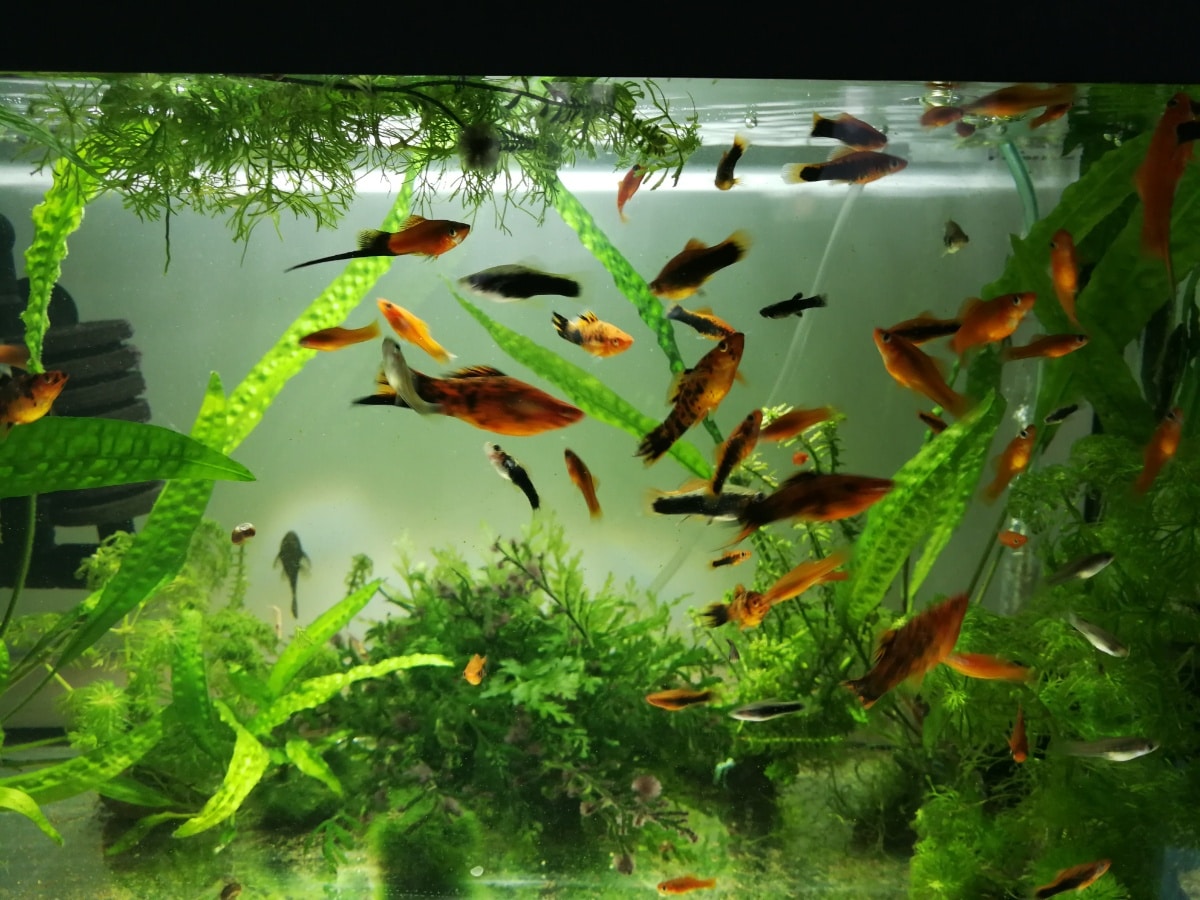
Complete aquarium kits are ideal for beginners , which is why they are especially designed for those fish enthusiasts who haven't been in the hobby for very long and need a product that includes all the necessary tools to get started without technical complications.
They are also a very interesting option if:
- You're going to give a gift to someone who wants to get started and doesn't know exactly which pieces to buy.
- You have little time and you prefer to set up the aquarium in an afternoon, following some simple instructions.
- Are you overwhelmed by comparing models of filters, lights, and heaters? And you want something that's already balanced for that volume of water.
- Are you looking for a children's or family aquarium? where children can learn to care for fish with adult supervision.
As we will see below, the kits usually include a series of basic elements , although, depending on the quality (and price) of the aquarium, these tools can be very simple or incorporate something more, such as decorations, a cabinet, food, water conditioner, guides for beginners, etc.
The great thing about choosing a kit when starting out in this hobby is that you not only have the basics to begin with, but as time goes on you can upgrade the elements you prefer (for example, replacing the filter with a more powerful one or changing the light fixture) without having to make a large financial investment all at once. The kit is the starting point, not the final equipment for life.
What should an aquarium kit have

Aquarium kits can include many things, but the most basic items that shouldn't be missing (and what you should make sure is of the best quality) are the following:
Filter
The most important element of an aquarium (besides the fish, of course) is the filter. Broadly speaking, it's what distinguishes an aquarium from decorative fish tanks, since in the latter, the water needs to be completely changed, while a filter cleans and stabilizes the water before returning it to the aquarium.
To do this, in addition to machinery, it uses specific filter materials such as mechanical sponges, ceramic rings for biological filtration, activated carbon to absorb organic compounds, or perlon, a cotton-like material we talked about a few days ago.
Modern kits usually include:
- Mechanical filtration: retains large debris such as leaves, uneaten food, or suspended particles.
- Biological filtration: thanks to porous materials (microns, ceramic balls) where beneficial bacteria live that transform ammonia and nitrites (toxic) into nitrates (less dangerous).
- Chemical filtration: usually with activated carbon, which helps to eliminate odors, traces of medicines and other dissolved substances.
There are two main types of filters : internal filters, which are submerged in the aquarium and are suitable for small to medium-sized tanks, and external filters, which are suitable for larger aquariums. Internal filters include sponge filters, hang-on-back filters (HOBs), which are very popular with beginners due to their ease of installation and maintenance.
In specialized comparisons, the kit's filter is highly valued:
- Tenga several well-separated filtration stagesso you can replace or clean each one without disassembling everything.
- Offer a adjustable flow rateto avoid excessive currents that stress peaceful fish.
- Sea silentThis is essential if you're going to have the aquarium in the living room or bedroom.
LED Lighting

Aquarium lighting used to be done with metal halide or fluorescent lamps, but lately LEDs have become much more popular , not only because they are visually very attractive, allow for light of many colors and look great, but also because they are more energy efficient and produce less heat, something your fish will appreciate.
In principle, lights are primarily an aesthetic element if you only have fish, although in planted aquariums, lighting is essential for plants to photosynthesize and grow healthy. Many mid-to-high-quality kits already include:
- Day and night modes (white and blue, for example) can be activated with a simple switch or remote control.
- Intensity and color control to create sunrise, sunset or storm effects.
- Low power consumption, with sealed LED strips that withstand humidity without problems.
In tests carried out by many experts, it is assessed that light:
- This well distributed across the entire surface of the aquarium, without dark areas.
- Do not overheat the water.
- Tenga a suitable spectrum if you are going to keep demanding plants (for very basic kits, they are usually suitable for easy or artificial plants).
Water heater
The most complete aquarium kits include a water heater , a tool that lives up to its name and is responsible for keeping the water temperature stable within a suitable range for your tropical fish (usually between 24 and 28 ºC).
In the simplest models you will have to check the temperature manually, with a thermometer, and adjust the heater when necessary, while the more complete ones include a built-in thermostat that automatically turns the heater on and off.
Heaters are especially useful if:
- You live in cold climates or climates with large temperature variations between day and night.
- You have a Aquarius de peces tropical (guppies, neon tetras, corydoras, bettas, etc.).
- The aquarium is in a room with drafts or uneven heating.
Some comparisons highlight kits that already include a heater pre-set to a standard temperature , because it greatly simplifies life for beginners: you just have to place it and plug it in, checking with a separate thermometer that everything remains stable.
Other essential kit items
In addition to a filter, light, and in many cases a heater, a good beginner's kit should include or consider these basic components (although they are sometimes sold separately):
- ThermometerIt can be made of internal glass, a suction cup, or an external adhesive strip; the important thing is to be able to monitor the actual temperature.
- Water conditionerIt is used to neutralize chlorine, chloramines and heavy metals in tap water.
- Basic food for fish: a good quality dry food for the first few weeks.
- Substrate or gravelIt is not always included, but it is highly recommended to stabilize the ecosystem and, if you have plants, to help them take root properly.
- Decoration and sheltersSome brands add synthetic plants or small decorations to create hiding places.
- Quick guide for beginners: with recommendations on cycling, water changes, number de peces, etc.
In addition, it is advisable to invest, even if they are not included in the kit, in a kit of test strips to measure pH and hardness, and in a net to handle the fish safely if necessary.
Types of aquarium kits
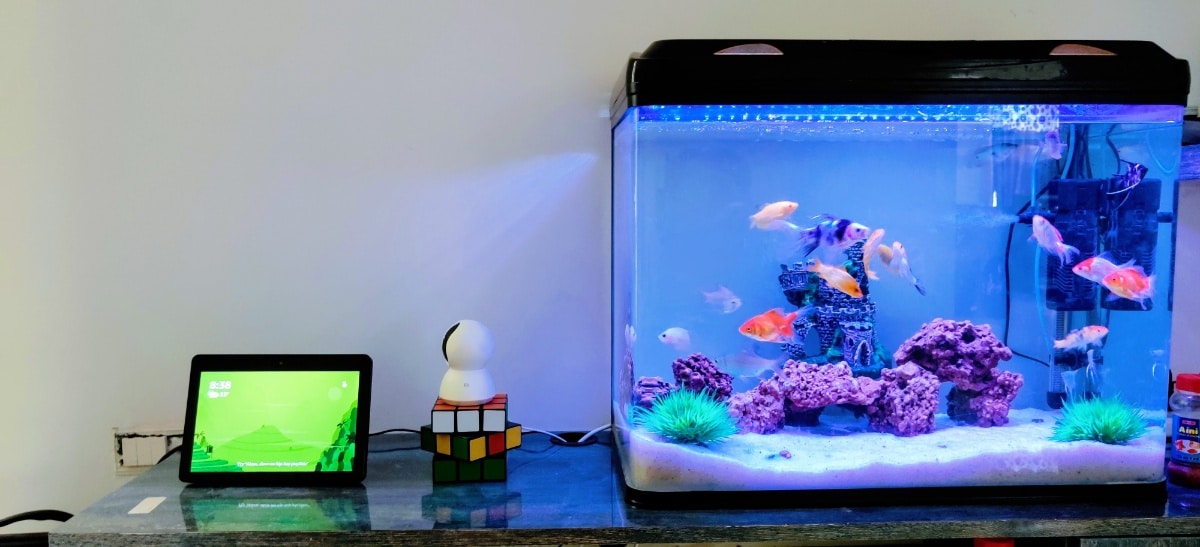
When buying an aquarium kit, the first question that probably comes to mind is how many fish we can keep in the aquarium, a question more complicated than it seems (we'll try to answer it in detail in the next section). Regarding the types of kits, the most common are the following:
Small (nano kits and desktop aquariums)
The smallest aquarium of all, usually with just enough room for a couple de peces small ones and some plants, it is situated among the so-called nano aquariums And desktop aquariums. They are very eye-catching, as they usually have panoramic or curved shapes.
Because their water volume is so small, the accessories (basically the pump and filter) are usually integrated inside the aquarium or the lid, so they take up little space and are very discreet . They often include a small LED strip and, in some models, a small compartment for the filter at the top.
Although tempting due to their price and size, it's worth remembering something many experts reiterate: very small aquariums are more unstable . Any overfeeding, filter failure, or temperature increase will have a much faster impact than in a large aquarium. If you choose a nano aquarium , it's important to:
- No overburden de peces the tank.
- Being consistent with the partial water changes.
- Choosing very hardy and small species, such as a single betta or a small group of shrimp.
40 liters
A slightly larger aquarium, although still within the small range-mediumTo find out the number de peces that you can put in, you will have to calculate how many plants, gravel and decorations you are going to use, as well as the average size of the fish when they are adults.
Typically, applying the calculation rules we'll see later, you can keep about 5 small fish , although the exact number will vary depending on the species and the space occupied by the accessories. Since they aren't very large, these aquariums also usually include the filter and often the pump integrated inside, with easy access from the lid.
This size allows for assembly:
- A small community de peces peaceful (for example, a group of small tetras with corydoras in the background).
- Un aquarium specifically for bettas with a little more space and some hardy live plants.
60 liters
Within the range of medium-sized aquariums, we find those of 60 liters, which are actually the best option for beginners . Very small and very large aquariums are more difficult to manage, precisely because of their size; in contrast, a 60-liter aquarium has the perfect amount to start with, as it is neither too big nor too small.
These aquariums typically accommodate around 8 small to medium-sized fish , always respecting the one centimeter per liter rule and adjusting the population to the species you choose. Furthermore, this volume allows for:
- Mount a simple planted aquarium with standard LED lighting and low-maintenance plants.
- Combine several compatible species (schooling fish, bottom-dwelling fish and some surface-dwelling fish).
There are some very interesting options that include everything you need : an internal filter with cartridges easily removable from the top, a preset heater, day and night lighting to provide the right light for your fish and plants, and even food and conditioner.
100 liters
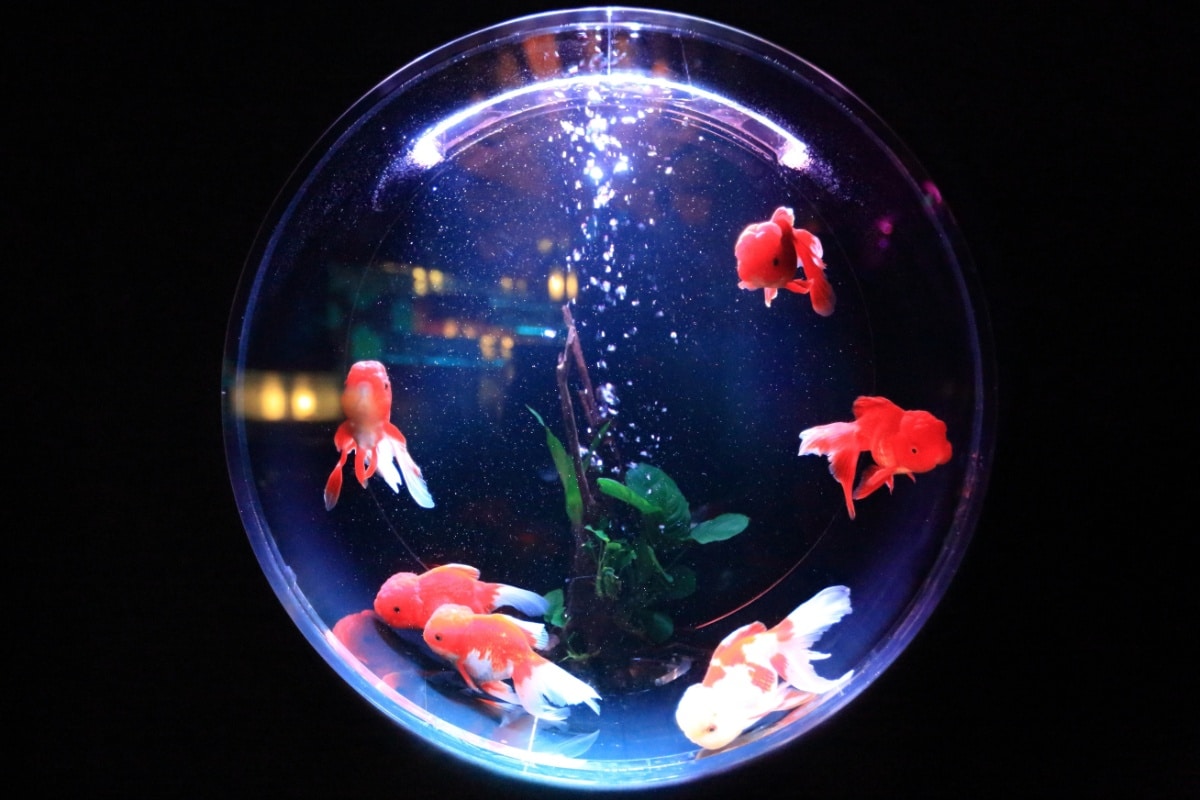
A considerably larger size, in which about 12 small fish or a combination of larger species can live , although, as always, it will depend on the adult size of the animals, the space occupied by the accessories, the type of filtration and the decoration.
These aquariums are no longer geared towards absolute beginners, but rather towards those who have already taken their first steps in small or medium-sized aquariums. Accessories, such as the filter, no longer always come pre-installed and are sometimes even external (hang-on or canister filters), which requires a bit more experience to set them up and maintain.
In return, a 100-liter aquarium offers:
- Greater stability in water parameters, which reduces the impact of small errors.
- More options from aquascaping (aquatic landscaping) with roots, rocks and plants.
- Possibility of maintaining large schools of fish who behave in a much more natural way.
With cabinet
Aquariums with cabinets, besides being among the most expensive on the list, include a cabinet adapted to the aquarium's dimensions . What's truly interesting about these models is that you can conceal all the necessary accessories within the cabinet: external filters, power strips, timers, food, siphons, etc.
Some advanced models even include overflow and sump systems in the cabinet, which is very common in marine or large aquariums, where filtration and extra water volume are essential.
Without a doubt, it is the most aesthetically pleasing and safe way to have a large aquarium in the living room, as the furniture is designed to support the weight and keep the tank perfectly level.
Marine
Marine aquariums are the most difficult to maintain , as marine fish and many invertebrates are very delicate and require extremely stable water in terms of salinity, temperature, pH, and other parameters (calcium, magnesium, alkalinity, etc.). If anything becomes unbalanced, the entire ecosystem can be affected.
However, they are also the most visually spectacular , with brightly colored fish, corals, anemones and other organisms that turn the aquarium into a little piece of reef at home.
That said, there are marine aquarium kits that provide the first tools needed to set it up, such as the complete filtration system, overflow, UV sterilizer , protein skimmer, and even a specific lighting system for corals.
If you've never had an aquarium, it's best to start with a freshwater kit and, with experience, consider making the leap to a marine project later on.
Cheap
The cheapest aquariums have two things in common: they have little volume of water and are freshwater. If you don't feel like complicating your life too much and you are only going to have a couple de peces Durable, these can be a good entry-level solution. For ideas and models, you can check out options from cheap aquariums.
You just need to make sure they include a reliable filtration system and keep them clean regularly. However, if you get the itch to keep fish and want to buy more or try more delicate species, you'll need a larger aquarium and better equipment.
How to calculate how many fish will fit in the aquarium
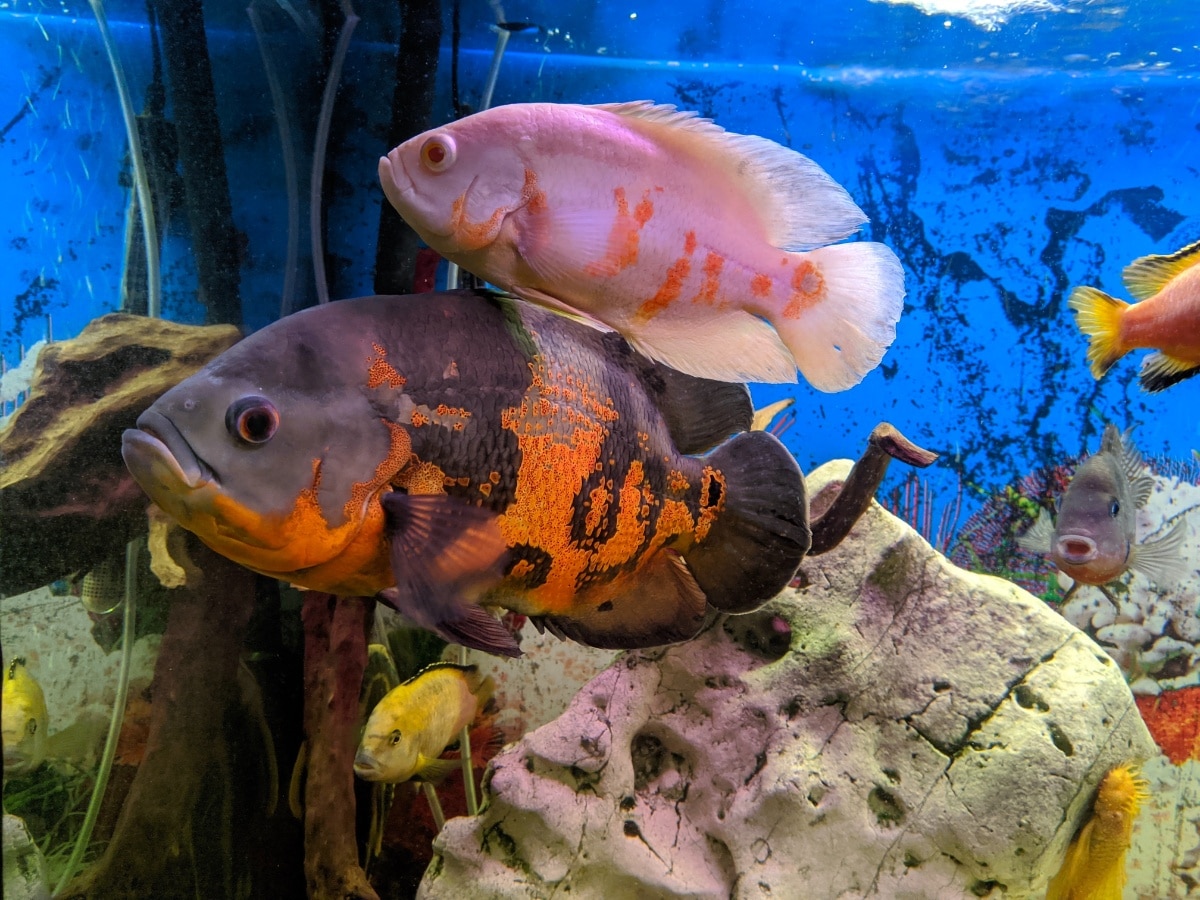
When calculating how many fish can fit in your aquarium , the most common rule is that you can fit approximately one centimeter of fish (measured at its adult size) per liter of water in well-filtered freshwater aquariums. This is just a general guideline, but it helps avoid the most serious problems of overcrowding.
To refine things a bit more , you'll need to perform a series of calculations based on the following:
Fish size
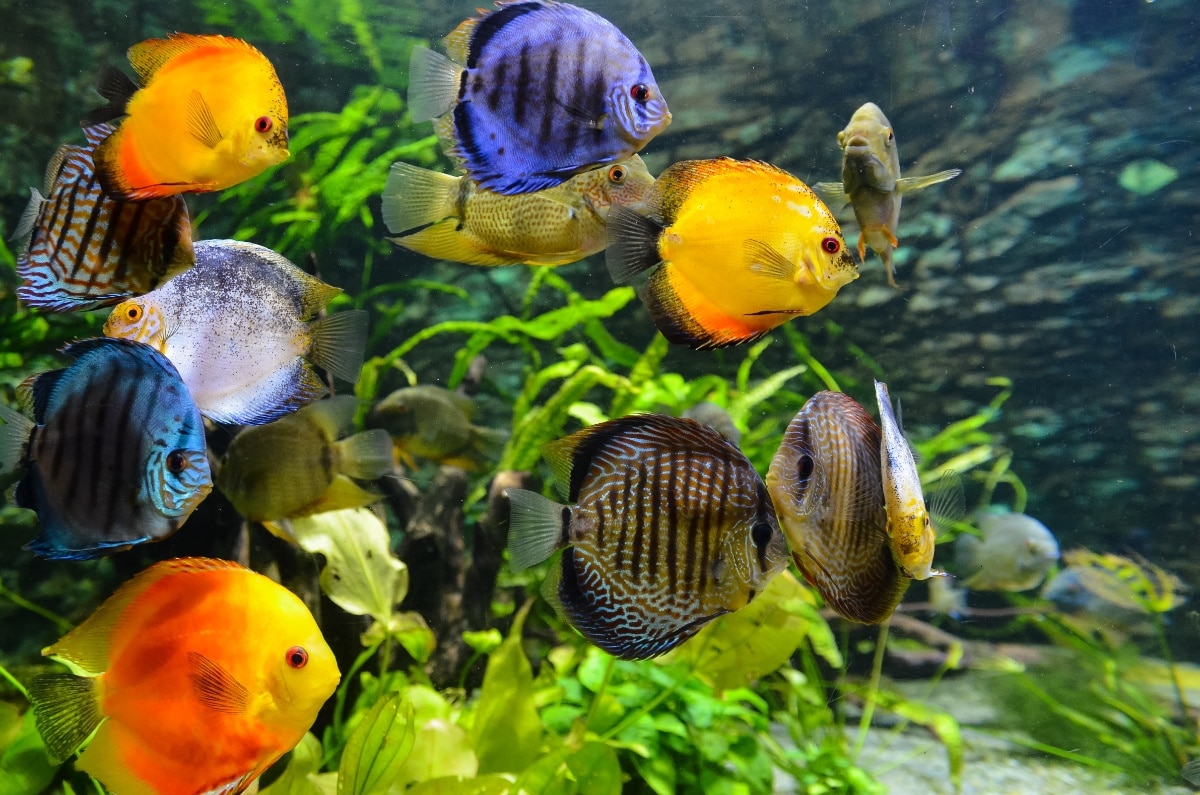
Naturally, the size of the fish is the first thing to consider when calculating how many will fit in the aquarium. Always base your calculation on the adult size the fish will reach (often, when purchased, they are still young and haven't finished growing).
Furthermore, depending on the type of water, you will be able to keep more or fewer fish. For example:
- In a marine aquarium The ratio is usually more conservative, around one liter of water for every centimeter that the fish measures (or even more, depending on the species).
- For sweet water A general guideline is 0,5 to 1 centimeter of fish per liter of water, always adjusting according to the species and behavior.
It's not the same to have small schooling tetras as it is to have a group of territorial cichlids. Therefore, in addition to the tank's length, you must consider the fish's behavior and activity level : very active or aggressive fish need more space than calmer ones.
Fish sex

The reason is simple: if you have male and female fish of highly prolific species, they will reproduce easily , and in no time you'll have an aquarium overflowing with them. This is very common with guppies, mollies, and other livebearers.
Too many fish can lead not only to less swimming space, which can cause territorial fights and stress , but also to an increase in waste (such as excrement and uneaten food) that the filter cannot process properly. The result is a deterioration in water quality and, consequently, health problems for your fish.
Plants and accessories
Finally, the plants and accessories (such as figurines, caves, or roots) that you put in the aquarium also factor into how many fish can fit, since they take up volume (leaving less free water) and affect the surface available for swimming.
Furthermore:
- live plants They consume nitrates and help oxygenate the water, but they can also produce organic matter when pruned or if they deteriorate.
- La gravel or substrate It also takes up space; although it may seem small, in small aquariums it can reduce the net capacity by several liters.
A simple way to avoid mistakes is to always calculate a safety margin : if you get, for example, 12 fish per volume, planted and filtered, start with 8 or 9 and observe how the aquarium responds during the first few weeks.
Does your kit include a freshwater or saltwater aquarium?

One of the most important decisions when choosing your first kit is whether you're going to set up a freshwater or saltwater aquarium . Many beginner kits are designed specifically for freshwater because they are simpler and cheaper to maintain.
Freshwater aquariums: pros and cons
Among the main advantages of freshwater aquariums are:
- Ease of installation and maintenance: you don't need to control salinity or parameters as complex as in marine environments.
- Lower cost: both the equipment and the fish and plants are usually cheaper.
- Less need for specialized equipment: protein skimmers and complex wave systems are not needed.
In return :
- Usually there less variety de peces truly exotic compared to the marine world.
- freshwater plants They require adequate lighting and, in heavily planted aquariums, sometimes CO₂ and fertilizers, which complicates the setup a bit.
Even so, for the vast majority of beginners, a freshwater aquarium kit is the most sensible and recommended option.
Saltwater aquariums: pros and cons
Marine aquariums offer :
- Very striking colors and species, with fish and corals of unique shapes.
- Un major technical challenge for those who have already become fond of freshwater aquariums.
But in return they present :
- More complex maintenancewith control of salinity, calcium, magnesium, alkalinity, etc.
- Greater sensitivity to change in water quality; small errors can have serious consequences.
- Much higher initial and maintenance costs, both by the team and by the inhabitants.
Therefore, if you're starting with your first kit, it's best to leave marine projects for later and focus on mastering the basics in freshwater.
Recommended additional equipment for your aquarium kit

Although the kit already includes the basics, there are some accessories worth considering to improve the stability of the aquarium and facilitate maintenance:
Filters and extra filter media
The standard filter is usually sufficient , but many enthusiasts end up expanding or improving it:
- El biological material adding additional ceramic beads or tubes.
- El mechanical equipment incorporating sponges of different porosity or layers of perlon.
- El filter typeswitching to a backpack or external filter model if the population or demands of the aquarium increase.
In any case, the important thing is that the filter provides an adequate filtration volume and smooth circulation , without generating excessive currents.
Specific heaters and temperature control
If the kit doesn't include a heater, or if the one it comes with isn't powerful enough, you should buy one that's appropriate for the actual volume of your aquarium . As a general guideline, approximately 1 watt per liter is recommended, adjusting slightly depending on the room's insulation and the ambient temperature.
A good thermometer (digital or glass) will help you verify that the temperature remains constant and detect possible problems before they affect your fish.
Improved lighting for demanding plants
If you're setting up a heavily planted aquarium or one with demanding plant species, the light from the kit might be insufficient. You might then consider:
- Install a LED screen specifically designed for planted aquariumswith adequate spectrum and power.
- Use timers to control the photoperiod and prevent algae.
Water testing and maintenance
In addition to what comes in the kit , it is very useful to have:
- Un test kit (strips or drops) for pH, nitrites, nitrates, hardness.
- Un aquarium siphon to clean the bottom during water changes.
- Un oxygenator or diffuser stone, if the filter does not move the surface enough or if the temperature is too high.
What species de peces Choose what to include with your first kit?
For those who are going to have an aquarium for the first time, it is essential to select hardy, peaceful and easy-to-care-for species that are suited to the size and characteristics of the kit you have chosen.
Some highly recommended options for beginners in freshwater are:
- guppiesLivebearing fish, very colorful and hardy, ideal for quiet community aquariums.
- Neon tetras or cardinal tetras: small, peaceful schooling fish that look great in groups.
- Zebrafish (Danio rerio): very resistant, active and adaptable to different conditions.
- Mollies and platies: robust and easy to maintain, although it is advisable to control their tendency to reproduce.
- CorydorasSmall bottom-dwelling fish that help stir up the gravel and bring a lot of life to the aquarium.
It's always a good idea to consult a professional at the store about compatibility between species, the adult size they reach, and their specific water needs (pH, hardness, temperature, behavior).
One of the most common mistakes beginners make is overstocking the aquarium . Respecting the guidelines on centimeters per liter and starting with a few species, observing how the system stabilizes, will save you a lot of trouble.
Basic maintenance of a complete aquarium kit
There's nothing more rewarding than watching your fish swim and thrive. To achieve this, regular aquarium maintenance is essential.
- Partial water changesThe usual practice is to change between 10% and 25% of the water every week or every two weeks, depending on the biological load.
- Filter cleaningAlways follow the manufacturer's instructions, rinsing the materials in water from the aquarium itself to avoid killing beneficial bacteria.
- Crystal Cleaning: with magnetic window cleaners or specific spatulas for removing algae.
- Parameter control: using water tests to detect any imbalances early.
- Moderate diet: giving only the amount of food that the fish can consume in a few minutes.
With this care, even a simple kit can become a stable and healthy aquatic ecosystem for many years.
Where to buy a complete aquarium kit on sale
You can find complete aquarium kits, on sale or not, in many places . The most common and recommended ones are the following:
- AmazonWith its enormous variety of different aquariums and price ranges, it's very likely they have the option you're looking for. Also, something important to consider is that they have a highly efficient transport systemEspecially with the Prime option, you'll have the aquarium at home in no time.
- En department stores like Carrefour There are also some interesting options, although not as many as in other places. To find the best deals, it's a good idea to keep an eye on their website, where they're often posted. online promotions and discounts very attractive.
- Finally, in specialty pet stores At stores like Kiwoko and other chains or local shops, you'll find a wide variety of aquariums. It's highly recommended that you visit a physical store if you're buying an aquarium for the first time, as the staff can be very helpful if you have any questions. which kit best suits your experience, space, and budget.
Complete aquarium kits are ideal for beginners because they include all the necessary tools to set up your own little piece of a river (or sea). From there, you can customize the equipment and species to your liking as you gain experience. If you've already used a kit, you can share which model you chose, what size worked best for you, and which fish gave you the best results to help other hobbyists who are just starting out.

Table of Contents
- 1 The best aquarium kits to start with
- 2 Who are the complete aquarium kits intended for?
- 3 What should an aquarium kit have
- 4 Types of aquarium kits
- 5 How to calculate how many fish will fit in the aquarium
- 6 Does your kit include a freshwater or saltwater aquarium?
- 7 Recommended additional equipment for your aquarium kit
- 8 What species de peces Choose what to include with your first kit?
- 9 Basic maintenance of a complete aquarium kit
- 10 Where to buy a complete aquarium kit on sale