

If you have a fish tank, you might be thinking about getting a fish feeder so you can forget about having to feed them manually every day. With these devices, you only need to worry about refilling the food reservoir when it runs out. They are very convenient and efficient devices that save us from the typical "I forgot to feed the fish" predicament and allow us to maintain a stable feeding routine, even when we're not home.
Furthermore, modern automatic fish feeders have evolved considerably: they allow you to program multiple feedings per day , adjust the amount of food precisely, adapt to different types of food (flakes, granules, pellets, etc.), and some advanced models can even be managed via digital timers or connectivity with other devices. In this article, we'll analyze how to choose your fish feeder based on your needs, which features are truly important, and which are the best models available.
Want to learn more about aquarium food dispensers and how to get the most out of them? Keep reading.
Best Fish Food Dispensers

Below you can see a selection of very popular automatic feeders among aquarium enthusiasts. These are tried and tested models, with good reviews, that meet different needs depending on the size of the aquarium, the number de peces and the type of food you use.


From now on we will analyze each of the most purchased models by the fish-loving community and what their main characteristics are , how they work on a daily basis and what type of aquarium they are best suited for.
Automatic feeder

This feeder is well-designed to withstand high humidity without damage or deterioration. This is crucial in an aquarium, as the environment is constantly filled with water vapor and splashes, and an unsuitable material would quickly spoil or allow the food to become soggy.
It allows you to program the amount of food you want to give your fish and the volume of food to put in the feeder. Thanks to its adjustable drum, you can precisely adjust the portions to avoid both overfeeding and underfeeding. Excess food not only harms the health of the fish but also causes spikes in ammonia and nitrates that cloud the water.
Depending on the aquarium's design, this automatic feeder can be mounted on a rim (attached to the glass edge) or placed independently on the aquarium lid. This versatility makes it easy to find the position where the food falls most evenly, improving food distribution for all the fish. You can see it here.
Food dispenser de peces

This dispenser is quite small, but it's perfect for feeding your fish if you only have a few or a small aquarium. Many aquariums only have four or five fish, so this compact dispenser ensures your fish won't be startled, as it blends in easily with the other aquarium components and doesn't create an excessive visual impact.
It has a finish ideal for resisting moisture , so it keeps the food inside in optimal condition for longer. The airtight seal of the container helps prevent the flakes or granules from clumping or disintegrating before falling into the water.
The container can be refilled as needed without having to disassemble the entire dispenser, greatly simplifying routine maintenance. An adjustable rotating function allows you to control the amount of food dispensed at each feeding, adapting the portion to the number and size of the fish in your aquarium. Check out the best prices here.
Detachable automatic feeder

In this case, we have a type of feeder that can be easily disassembled for transport or for cleaning its interior and keeping it in good condition. Proper maintenance of the device is essential to prevent the accumulation of food scraps and moisture, which could lead to mold or unpleasant odors.
It has a generously sized reservoir to hold plenty of food for an extended period, allowing you to forget about manually feeding the fish, which is especially useful if you're going to be away from home for several days or have a very irregular schedule.
The most revolutionary feature of this model is its display, which shows the food level so you know when to refill. This feature prevents unpleasant surprises and helps you plan when to refill the feeder without constantly opening it.
It allows connection to an air pump if needed, which helps keep food dry through a gentle airflow that prevents condensation inside the drum. Its price is very affordable considering all the features it offers.
Compact food dispenser

This automatic feeder allows you to regulate both the amount of food given to the fish and the feeding frequency . You can program it to feed every 12 or 24 hours, which is the most common schedule in most home aquariums. This flexibility helps adapt the feeding schedule to the species you keep, whether they are tropical fish, cold-water fish, or invertebrates.
It features a compartment for storing food and making refilling easier. The hinged lid of the reservoir simplifies refilling without needing to completely disassemble the appliance, reducing the risk of miscalibrating the settings.
Its compact design makes it easy to place in virtually any aquarium, even those with a closed lid where space is limited . You can see its beautiful finish here.
Manual and automatic food dispenser
No products found.
In this case, we have a dual-function dispenser . This dispenser allows you to feed your fish depending on their needs at any given time. If you want to feed the fish manually or need to do so for a specific period (for example, during treatment or quarantine), you don't have to remove it from the aquarium.
It features a manual feeding option that allows you to stop automatic food dispensing for any period of time. Meanwhile, the device keeps the food fresh inside, ready to reactivate automatic mode whenever you want.
It's quite resistant to moisture and made of materials designed for continuous use in aquatic environments . Furthermore, it's well-priced for the features it offers, making it a very attractive option if you're looking for a versatile feeder.
Using these models as a reference, you can choose the one that best suits you. depending on the size of your aquarium, the type de peces and the amount of time you want to dedicate to daily eating.
General information about fish feeders

Fish need to be fed regularly and in a balanced way , ensuring they receive all the essential nutrients they need. We must remember that they are in a place that is not their natural habitat, and we must minimize their stress as much as possible so that their life in the aquarium is as healthy and long as possible.
For this reason, a fish feeder is a great idea, both for those who are forgetful and for those who simply don't want to worry about feeding their fish daily and prefer not to be slaves to feeding schedules. A well-set-up automatic feeder allows for a much more stable aquarium routine , resulting in calmer fish and more consistent water quality.
With the feeder, you can feed your fish regularly and automatically . They are programmable, and you'll be amazed at how far technology has come in the aquarium hobby. If you ever need to feed them manually to strengthen your bond, better observe their behavior, or because a fish is sick, you can do that too, easily combining both feeding methods.
Generally, all fish feeders operate on AA batteries, as this is the safest and most practical way to ensure a continuous supply of food without needing a power outlet near the aquarium. These feeders consume minimal power since they only operate for a few seconds when feeding the fish. This ensures that a couple of quality batteries can power the feeder for months.
These types of feeders ensure that the fish are always well-fed and receive all the necessary nutrients, provided we choose quality food and adjust the portions. Some more advanced feeders offer additional features such as low battery alarms , food level indicators, extra protection against humidity, or connectivity with other aquarium systems. These are better suited for feeding fish with a more precise feeding schedule and for heavily populated or delicate aquariums.
In community aquariums, where species from different levels of the water column coexist, a well-placed feeder can help distribute food more evenly. For this to work, it's advisable to combine the feeder with good filtration and water circulation , so that the flakes or granules are distributed uniformly and all fish have access to their portion.
How to choose your fish food dispenser
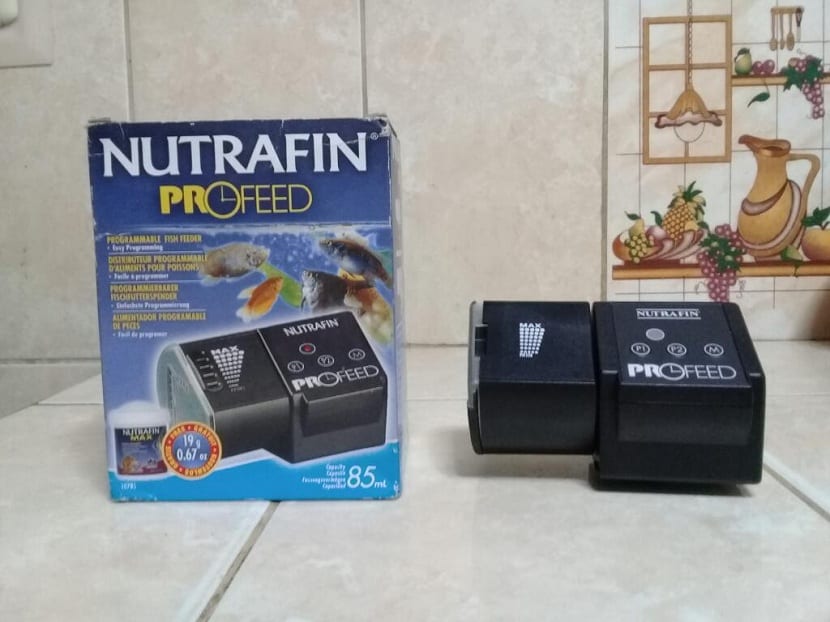
The market offers countless models and features, and it's normal not to know which one is best for you. To make a good decision, it's advisable to consider several key factors, which are also highlighted in the most comprehensive guides from competitors: hopper capacity , programming options, food compatibility, ease of cleaning, material quality, and value for money.
The first thing to consider when buying one of these devices is its ease of programming and refilling . The feeder should adapt to you, not the other way around. Some models allow for a single daily feeding, while others allow you to program multiple feedings at different times of the day. Choose the one that best suits your fish's needs, depending on the species in your aquarium and the feeding routine you want to maintain.
Another aspect to consider is the material it's made of . This is important given the humidity in the aquarium, and if the material isn't well-made, it will deteriorate over time. The best ones are usually made of high-quality plastic , as they withstand ambient humidity better, resist splashes, and don't warp easily. Ideally, you should choose a dispenser that will last as long as possible and won't become brittle or yellow over the years.
It is also very important to consider the type of dispensing mechanism . The most common are rotating drum feeders (very versatile and suitable for flakes and granules) and screw feeders (which release small amounts of food very precisely, ideal for small fish or very fine food). In some aquariums with species that are very sensitive to overfeeding, such as certain tropical fish or invertebrates, a mechanism that allows for minuscule doses can make a big difference.

Third, it's important to consider the style and design of the feeder , as it needs to blend in with the other aquarium decorations so as not to frighten the fish. If the fish perceive the feeder as a threat, they may stay away from the feeding area and eat less than they need.
Therefore, it's advisable to choose a model and color that matches the existing decor in your aquarium . In very minimalist or open aquariums, feeders with simple lines and dark colors tend to work best; in aquariums with a lid and black frames, a feeder in similar tones blends in much more.
Another point to consider is ease of cleaning and disassembly . A feeder with parts that open and separate easily makes it simple to remove accumulated food scraps and clean the drum when changing food types. This helps prevent blockages, mold, and unpleasant odors, and is one of the most highly recommended features in comprehensive comparisons.
Regarding the reservoir capacity , if you're often away for long periods or have a lot of fish, you'll want a feeder with a large reservoir that can store food for several days or even weeks. If, on the other hand, you're mostly home, a smaller but more compact model will be more than enough.
Compatibility with the type of food is also crucial. Not all feeders handle flakes, sticks, pellets, or microgranules equally well. It's advisable to check the specifications and, if you're using an unusual type of food, make sure the dispensing mechanism doesn't jam with that format.
Finally, pay attention to the programming . A digital timer with multiple time slots will allow you to replicate very precise feeding patterns. Some models allow two, three, or four feedings per day and even double the ration at certain times, which is very useful for species that need small but frequent meals.
Types of fish feeders
Within automatic feeders, several types of mechanisms can be distinguished that determine how the food is released and which aquariums they are best suited for.
- Rotating drum feedersThese are the most common. The food is stored in a cylindrical container, and when the programmed time arrives, the drum rotates and drops a portion through an adjustable opening. They are very versatile and work well with medium-sized flakes and granules.
- Screw feedersThey use a screw mechanism that pushes the food outwards with each activation. This system allows for the release of very small and homogeneous quantitiesTherefore, it is ideal for aquariums with small fish, fry, or species that require very controlled feeding.
- Compartment or disc feedersThey have a disc with several individual compartments that open according to a programmed schedule. Each compartment can be filled with the ration for one feeding. They are very useful if you want plan each meal precisely or combine different types of food over several days.
The choice of feeder type will depend on the species de peces that you have and the amount of food they need daily. For standard community aquariums, a rotating drum feeder is usually sufficient; for more specialized projects or delicate species, a screw-type or disc-shaped feeder can give you even greater control.
Essential Features to Consider
When selecting an automatic fish feeder, it's essential to consider certain features that can affect both the health of your fish and the efficiency of the device . A good choice isn't based solely on price, but on a combination of several key aspects.
- Deposit capacityEvaluate how much food the feeder can hold and for how many days it will meet your aquarium's needs. A larger reservoir might be convenient if you plan to be away for several days.
- programmable timerThe ability to schedule specific feeding times and amounts is crucial for maintaining a proper diet and avoiding overfeeding. The more scheduling options, the greater the control.
- Food compatibilityCheck if the feeder is suitable for the type of food you use (flakes, granules, pellets, freeze-dried food). Some mechanisms are better suited to certain formats.
- Ease of cleaningAn easy-to-disassemble and clean design will save time and effort in its maintenance and prevent problems with blockages or mold.
- Power sourceConsider whether it runs on batteries or electricity. Battery-operated models offer more location flexibility and they avoid cables near the water, which is preferable in most home aquariums.
- Quality of materials: opt for resistant, non-toxic plastics that are designed to withstand the constant humidity of the aquarium without deforming or cracking.
These features improve both the care experience and the overall well-being of your fish , and are the criteria used by most specialized comparisons when analyzing the best models of automatic feeders.
Price, quality and relationship with features
The prices of automatic fish feeders can vary considerably depending on their features and quality . Basic models are usually reasonably priced and perfectly adequate for simple aquariums, while more advanced models offer highly detailed programming, greater capacity, and additional technological features.
In the entry-level range, you'll find feeders with essential features (one or two feeding times, single drum, manual portion control) at an affordable price. They're perfect if you're looking for a basic, functional solution that allows you to be away without worrying about the food.
In the mid-range, there are models with digital timers , several programmable meals per day, better protection against humidity, and larger reservoirs, ideal for enthusiasts who want a very stable feeding routine.
At the high end are feeders with advanced features such as additional connectivity with other aquarium equipment, highly precise dosing systems, and exceptionally robust designs. While their price may be higher, they are ideal for large aquariums, professional setups, or for those seeking maximum control.
When comparing aquariums, it's important not to focus solely on cost: consider whether the additional features justify the investment for your specific needs. A higher price doesn't always translate to better results if your aquarium doesn't require so many features.
Choosing a good fish feeder involves analyzing your actual needs , understanding your fish's behavior, and finding a model that offers safety, feeding stability, and ease of use, so you can enjoy your aquarium more and your fish stay healthy and well-fed in the long run.