

To maintain the quality of our aquariums and establish good conditions for the proper development and care of our fish, we must have a good aquarium filter . Aquarium filters are necessary to increase water oxygenation and reduce pollution from organic matter that accumulates over time, such as uneaten food, excrement, plant leaves, and suspended particles.
A proper filtration system makes all the difference between a stable aquarium with healthy fish and thriving plants, and a tank plagued by constant algae problems, unpleasant odors, and disease. Whether you have a 20-liter nano aquarium or a 300-liter tank with large fish, choosing the right filter is essential for maintaining a balanced environment and minimizing maintenance.
In this article, we'll list the best aquarium filters , their features, what a good filter should have in terms of value for money, and how to choose the most suitable model based on the type of aquarium and water volume. You'll also learn about the different types of filtration (mechanical, biological, and chemical), the types of filters available, and the keys to proper maintenance.
The best filters for aquariums

There are countless models and brands of filters on the market, but not all offer the same performance or suit every aquarium. Below is a selection of filters highly rated by hobbyists for their reliability, filtration capacity, and low noise levels . This selection includes internal filters, submersible pumps, and hang-on-back filtration systems , covering everything from small aquariums to medium-sized setups.
Hygger aquarium filters

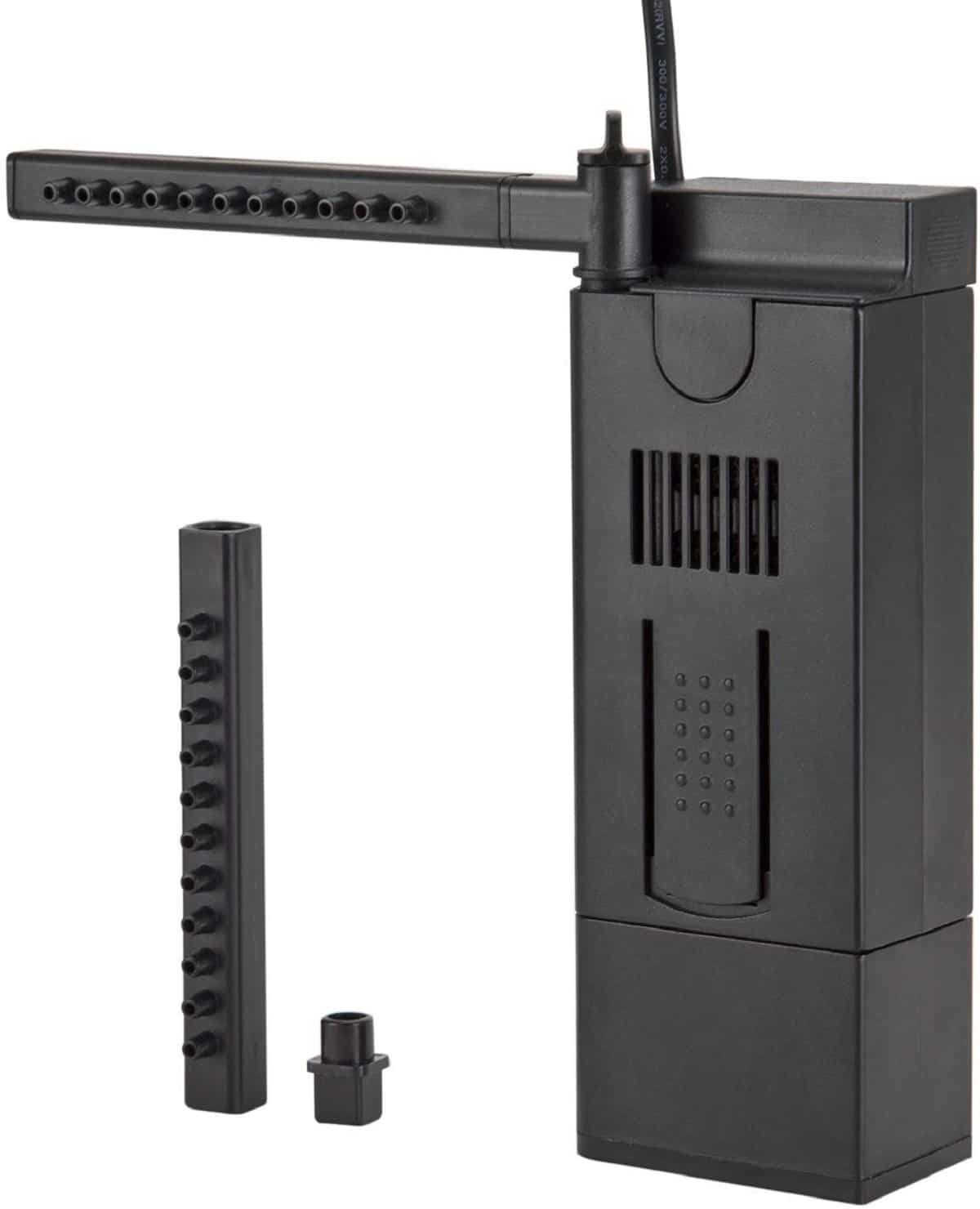
This is an internal aquarium filter capable of filtering between 8 and 30 liters of water per hour . It includes a 7W water pump that can pump approximately 420 liters per hour. It also features a sponge and activated carbon to enhance the filtration of organic matter in the water, combining mechanical and chemical filtration in a single unit.
The included spray bar helps to better oxygenate the water's surface by breaking up the surface film and promoting gas exchange. This is especially useful in aquariums with a high biological load or in sparsely planted tanks, where oxygen consumption is high.
This type of internal filter is ideal for small and medium-sized aquariums , breeding tanks, or quarantine tanks. It's compact, easy to install using suction cups, and maintenance is limited to cleaning the sponge and periodically replacing the activated carbon. Click here to purchase this filter.
IREENUO Internal Aquarium Filter Pump

This model features a 4-in-1 aquarium pump . The submersible water pump is multifunctional, serving as a water filter, fountain pump, oxygenator, and wavemaker. It's suitable for a wide variety of aquariums, including breeding tanks , aquascaping aquariums, and small water features.
It has a switch on the side of the air pump that helps us adjust the water flow speedThe oxygen supply has a valve that helps control the flow of air entering and exiting, allowing the number of bubbles to be adjusted to the type of oxygen being used. de peces that we have (fish from gentle currents or species that appreciate greater turbulence).
The pump is capable of filtering large quantities of water and can generate relatively strong waves that better simulate the fish's natural ecosystem. Its ability to project water up to 1,6 meters makes the aquarium landscape much more attractive and appear more natural, especially in setups with rocks or roots where visible water movement is desired.
This type of aquarium filter is very easy to assemble and clean, so maintenance is minimal. The motor is durable and quiet, making it a good choice for aquariums located in bedrooms, living rooms, or offices where noise should be kept to a minimum . If you'd like to purchase a filter like this, click here.
Submersible Pump 500L / H 6W Ultra Silent

This pump is made with high-quality materials and features a heavy-duty ceramic shaft . The motor is made of pure copper, making it highly durable and corrosion-resistant. This allows for long-term water pumping, oxygenation, filtration, and various waveform functions without any loss of performance.
The advantage of this design is its ultra-quiet operation . It features four strong suction cups that effectively block noise from the unit's movement, reducing vibrations against the glass. The water flow is adjustable, and it has multiple outlets, making it suitable for small aquariums, ponds, or decorative fountains.
For easier maintenance, this pump is quite easy to disassemble and clean. This way, you don't have to worry too much about it. It comes with a large biochemical carbon filter area , which helps maintain a cleaner, odor-free, and discoloration-free aquarium environment.
The maximum flow rate is 500 liters per hour . It's suitable for fish tanks, ponds, rock gardens, water gardens, hydroponic systems, irrigation gardens, and aquariums, among other applications. It can be used not only underwater but also underground when integrated into irrigation systems or fountains. If you'd like to purchase one of these models, click here.
AquaClear Filtration System 20

This aquarium model features a filtration system that utilizes the full potential of the filter basket. It helps ensure that the entire volume of water passing through the filter is free of organic material. Its design optimizes filtration efficiency, making the most of the filter media placed inside.
It's easy to maintain and has a convenient parts replacement system, while also promoting constant water recirculation . Being a hang-on-back filter, it doesn't take up valuable space inside the aquarium and improves oxygenation by creating a cascading water flow. It's a very affordable model and a classic choice for small and medium-sized aquariums. You can buy it by clicking here.
What is an aquarium filter and what is it used for?
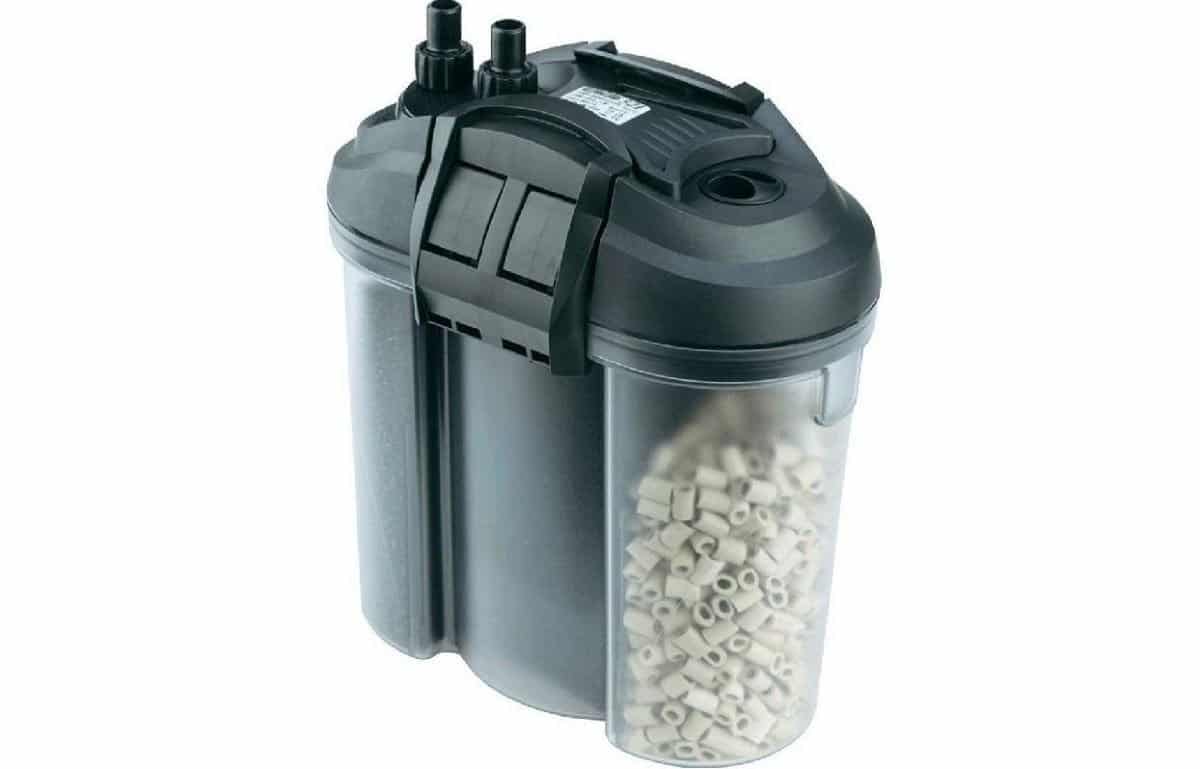
An aquarium filter is a device designed to keep the water clean and free of impurities, such as food scraps, waste de pecesIt removes suspended particles and potentially toxic chemical compounds. It recirculates the tank water and filters out elements that could compromise health. de peces, invertebrates and plants.
Its operation is based on three main types of filtration :
- Mechanical filtration: retains solid particles (food scraps, dead leaves, detritus) using sponges, foams or perlon.
- Biological filtrationIt uses beneficial bacteria that colonize porous materials (ceramic tubes, bio-balls, sponges) to transform toxic compounds such as ammonium and nitrite into less harmful nitrate.
- Chemical filtrationIt uses methods such as activated carbon or special resins to remove toxins, medications, odors and discolorations from water.
In addition to filtering, a good filter helps oxygenate the water and maintain a constant flow , which is essential for the health of the aquarium's inhabitants. This mimics, on a small scale, the functioning of a river or lake, where the movement of water prevents waste from accumulating to dangerous levels.
It also helps to trap solid particles such as plant debris and other contaminants, removing elements like leftover medications and uneaten fish food from the water. In aquariums without filters, these residues accumulate rapidly, causing spikes in ammonia and nitrites that can kill fish quickly.
How an aquarium filter works: types of filtration in detail
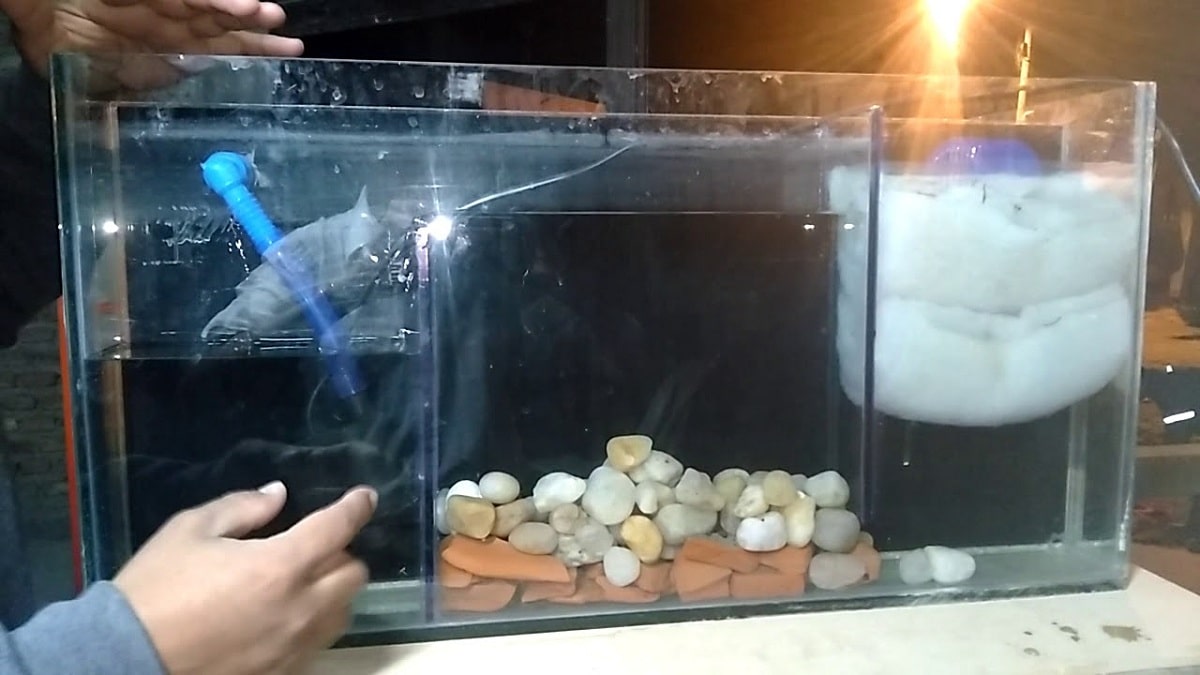
Although each model has its own design, all aquarium filters share a basic principle: they take water from the tank, pass it through different filter media, and return it clean . Understanding what each filtration stage does will help you choose the right filter and set it up correctly.
Mechanical filtration
Mechanical filtration is the first barrier of the filter. Its function is to retain visible particles so they don't continue circulating in the aquarium. This is achieved using:
- Sponges of different thicknesses.
- Perlon or filter wadding.
- Specific filter meshes and cartridges.
Placing the mechanical filtration at the water inlet allows the other filter media to stay cleaner for longer by preventing them from becoming clogged with coarse debris. These elements should be cleaned regularly to avoid reducing the filter's flow rate.
Biological filtration
Biological filtration is the most important for the stability of the aquarium. This is where nitrifying bacteria live , transforming highly toxic ammonia (NH4/NH3) and nitrites (NO2) into nitrates (NO3), which are less harmful and can be assimilated by plants.
This requires the use of a large specific surface area :
- Porous ceramic tubes.
- Bio-balls or plastic materials with a complex internal structure.
- Fine pore sponges.
The more surface area available, the more bacteria the filter can hold, and the better the system's ability to process nitrogenous waste . That's why large external filters typically offer very stable water quality, even with a high bioload.
Chemical filtration
Chemical filtration is optional, but very useful in specific situations. It involves using materials that adsorb or react with substances dissolved in water. The most common are:
- Activated charcoal to remove medications, odors or yellowing colors.
- Specific resins to reduce phosphates, silicates or nitrates.
- Means for removing heavy metals from sensitive assemblies.
It is recommended to use this type of filtration only occasionally ( for example, after a drug treatment) and not continuously, unless you are looking to solve a specific and permanent water problem.
How to choose aquarium filters

To choose an aquarium filter that suits our needs and preferences, we must consider several technical and practical aspects. It's not just about buying the most powerful model, but about finding the one that... best suits the volume, type de peces and available space.
- Pump flow rate performanceFlow rate is measured in liters per hour (l/h). As a general guideline, the filter should move between 4 and 6 times the total volume of the aquarium per hour. For example, for a 100-liter aquarium, a filter that moves between 400 and 600 l/h is recommended.
- Filter capacity to hold filter mediaThis depends on the amount and types of waste that accumulate in our aquarium. de peces that we have. The more bioburden (large fish, many specimens, abundant food), more important is having large volumes for biological filtration.
- Flow rate and aquarium volume relationshipAn oversized filter can generate too much current for slow-swimming fish or delicate planted aquariums, while a filter that is too small will not be able to process waste properly.
- Flexibility in the configuration of the filter layersIt's important to be able to choose the amount of material that is filtered and the order in which it is filtered. This allows us to prioritize biological filtration, add or remove activated carbon, or modify the sponges according to the aquarium's needs.
- Ease of maintenanceA good filter should be easy to open, clean, and reassemble. If maintenance is too complex, it's more likely to be delayed and lead to water quality problems.
- Noise levelThis is essential if the aquarium is in a relaxation or work area. Many manufacturers highlight their models. silent, something to be especially valued in internal filters and submersible pumps.
- Power consumptionIn the long term, an energy-efficient filter represents significant savings, especially in large aquariums that require powerful pumps running 24 hours a day.
In addition to these factors, the type of setup you want also matters: marine aquariums , planted aquariums, breeding aquariums, and shrimp tanks require different approaches in terms of flow rate and type of filtration.
Types of filters for aquariums
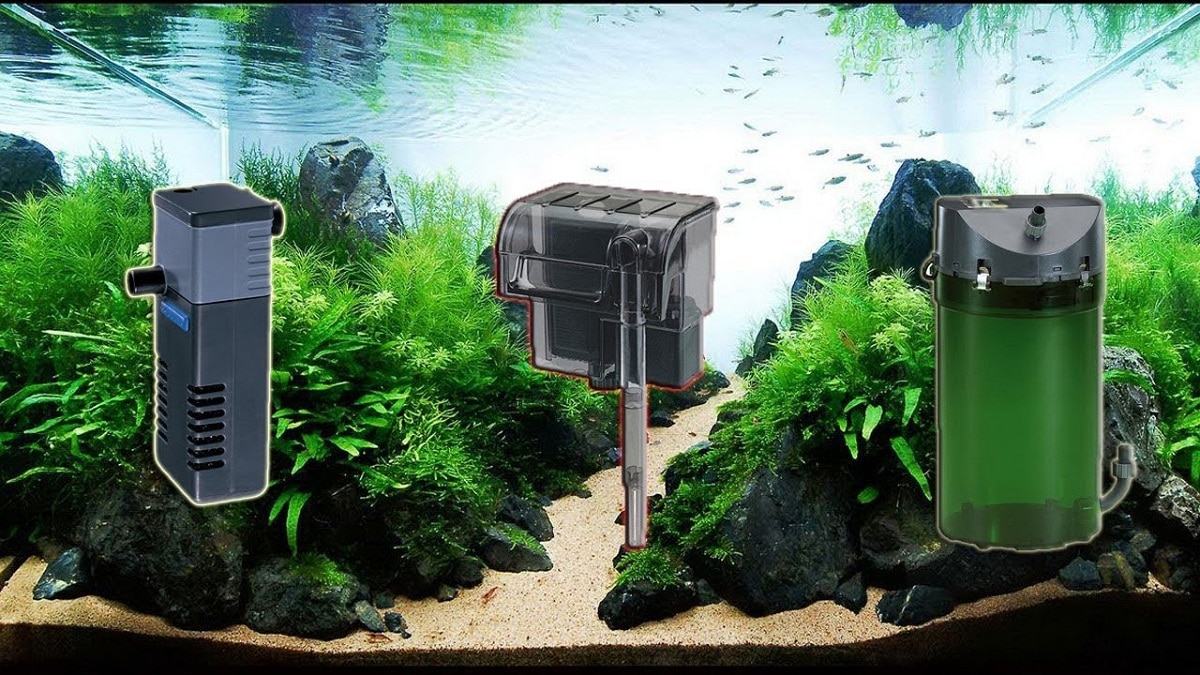
There are different types of aquarium filters depending on the needs and characteristics of the setup . Some are ideal for small and breeding aquariums, others for large community tanks or advanced aquascapes. The most common types are described below.
- Internal aquarium filtersIt is one of the most widespread models in the world of aquariums. It is suitable for planted aquariums, small marine aquariums, and breeding tanks. de pecesThey are placed inside the aquarium using suction cups and combine mechanical and biological filtration. Easy installation, low consumption and affordable priceideal for beginners.
- Sponge filtersThere are quite a few variations of this type. They are mainly used for keeping shrimp, fry, or killifish. They work by passing air through the sponge, generating a gentle suction. They offer a Very gentle and safe filtration for hatchlings and small invertebrates.
- Box filter or corner filterIt's a basic system capable of holding various types of filter media (sponge, carbon, ceramic rings). It's ideal for small aquariums that require gentle filtration with low current. They typically operate with air pumps.
- Plate filterThis is another type of internal filter, but less common. It's recommended for aquariums with live plants placed under the substrate. One drawback is that deep plant roots can clog the filter, and maintenance is more complex, requiring partial substrate removal.
- External filtersThey are placed outside the tank (also known as canister filters). One of the main advantages is that They do not take up space inside the aquariumThis is both an aesthetic and practical advantage. They offer a large volume of filter media, are very efficient for medium and large aquariums, and allow for a very flexible filtration configuration.
- Waterfall filter or backpack filterIt's an external filter that hangs on one of the tank walls. It effectively oxygenates the water's surface and allows for the use of various filter media. They are very popular because of their easy maintenance and low noise levelideal for aquariums between 30 and 150 liters.
- UV filters and surface skimmersWhile they don't replace a main filter, they are very useful additions. UV filters use ultraviolet light to eliminate suspended algae and microorganisms, and surface skimmers remove the layer of grease and particles that forms on the surface of the water, improving oxygenation.

When to choose an internal, backpack, or external filter
The choice between an internal, hang-on or external filter depends mainly on the aquarium's volume, the bioload and the available space around the tank.
- Internal filterRecommended for small and medium-sized aquariums (up to about 80-100 liters), breeding tanks, quarantine tanks, or as an auxiliary filter. They are compact, economical, and easy to install, although they do take up space inside the tank.
- Backpack filterPerfect for aquariums between 30 and 150 liters where you want free up interior spaceThey offer a good combination of mechanical and biological filtration, are very easy to clean, and are quiet.
- External filterThe best option for medium and large aquariums (from about 100 liters). Its large filter media capacity allows for more stable aquariums with large fish, demanding planted setups, or high bioloads, requiring less maintenance.
Filter maintenance
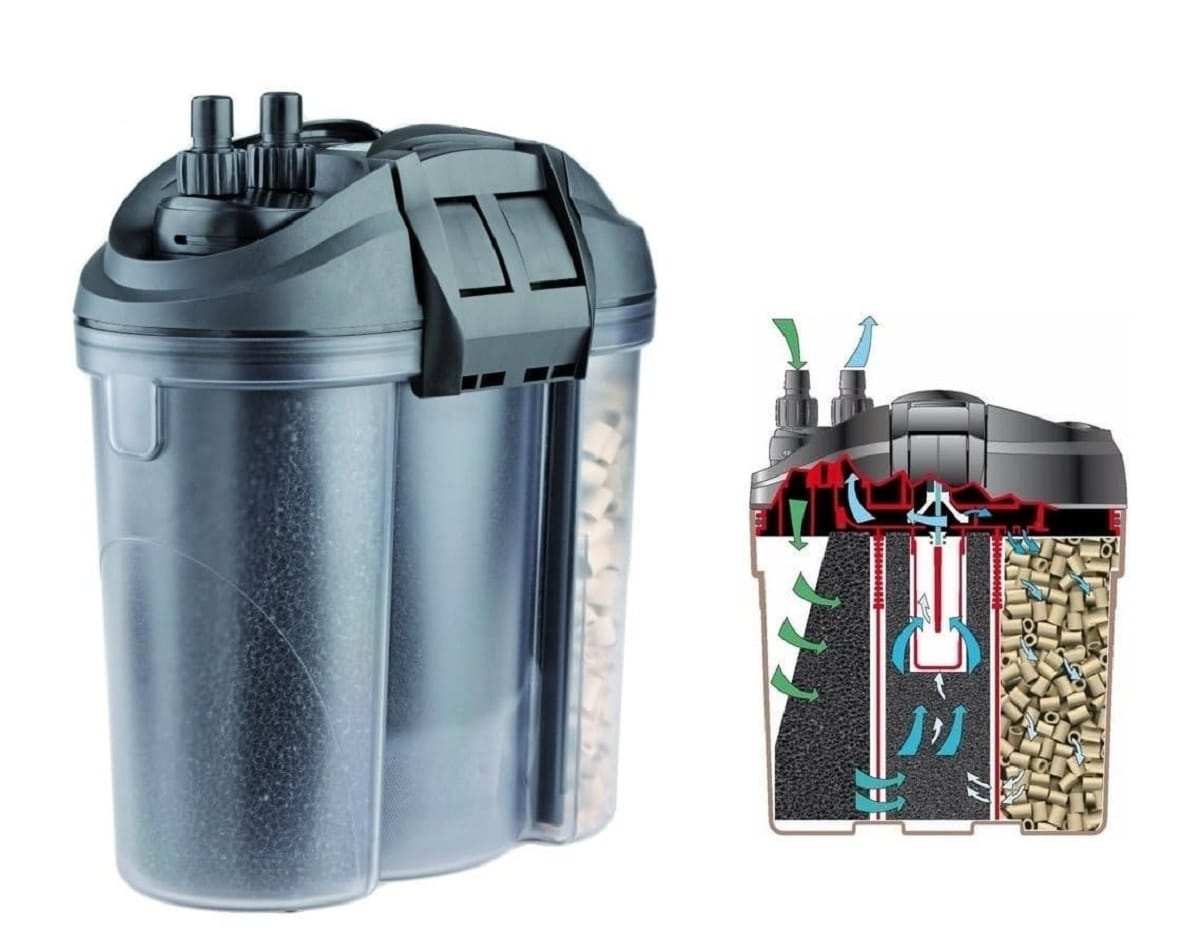
Filter maintenance should be performed regularly, approximately every 15 days . If the aquarium is larger and has an external filter, cleaning can be spaced out to once a month, always monitoring the flow rate and water quality. Proper maintenance prevents performance losses and quality problems.
To perform the maintenance, we do the following:
- We unplugged the filter from the power supply to work safely.
- We separate the engine area from the part that has the sponge and the other filtering agents.
- We use a bucket of water from the aquarium itself to clean the sponges and biological materials.
- Using aquarium water, gently clean the sponge, avoiding squeezing it too much so as not to eliminate all the beneficial bacteria.
- We clean the elements of the mechanical filtration (perlon, coarse foams) and discard those that are very deteriorated, replacing them if necessary.
- We avoid washing biological materials under the tap, as chlorine can seriously damage the bacterial colony.
- We put everything back as it was at the beginning, checked that there were no air bubbles left in the rotor, and plugged the filter back in.
It's important not to over-clean all the materials at once. Leaving part of the biological filtration untouched ensures that the aquarium doesn't lose its ability to process nitrogenous waste after each maintenance.
How often should we change the filter or its materials?
Filters deteriorate over time, but it's rarely necessary to replace the entire unit unless the motor fails or the plastic is damaged. What we do need to replace periodically are the filter media , especially the mechanical and chemical filters.
One indicator that will tell us whether or not we need to replace the entire filter is a reduction in its ability to move water, even after a thorough cleaning. If we notice that the water isn't being cleaned properly, the flow rate is very low, or the filter is making strange noises, the impeller or motor may be worn out.
Regarding filter materials:
- Sponges and perlonThey are replaced when they lose their shape, break, or are not cleaned properly. They usually last several months if maintained correctly.
- Activated carbonIt is advisable to change it every 3-4 weeks when in use, as once saturated it stops adsorbing chemical compounds.
- Biological material (microbeads, bio-balls)It is rarely replaced completely. Only a part is renewed when it is very deteriorated, in order to always maintain a stable colony of bacteria.
We can also check the condition of the filter when we proceed to clean it: cracks in the casing, broken ceramic shafts or damaged cables are signs that it is advisable to replace the equipment for safety reasons.
Current brands and trends in aquarium filters

There are numerous aquarium filter manufacturers on the market. Some stand out for their value for money, while others offer high-end solutions with advanced technology. Knowing these brands helps you choose reliable and long-lasting products.
- TetraKnown worldwide for its aquarium products. Its filters are characterized by being easy to use, durable, and having readily available replacement parts, suitable for beginners and advanced users.
- ICAA company with a strong presence in the Spanish market. It offers compact and affordable filters, with a good balance between performance and price, designed for hobbyists looking for practical solutions without spending too much.
- MarinaA brand geared towards small and medium-sized aquariums. Their filters are notable for their... Easy installation and low maintenanceideal for those setting up their first aquarium.
- BPS BUENA PET SHOPKnown for offering affordable yet efficient products, their filters are appreciated by those looking to equip their aquariums on a budget while maintaining adequate performance.
- Hagen / FluvalFluval is a leading group in the industry. Fluval filters are renowned for their efficiency, ergonomic design, and very quiet operation, covering everything from small aquariums to large installations.
- EheimOne of the most prestigious names in filtration. Their external filters and pumps are synonymous with premium quality, quiet operation and long lifespan, highly valued by experienced aquarists.
- Oasis: a brand that has gained relevance with its high-end external filters, some with integrated heater and easily accessible pre-filter, facilitating maintenance and improving the aesthetics of the aquarium.
- JBLWith its Cristal Profi series, it offers very complete external filters with optimized flow and robust design, often at a more competitive price than other high-end brands.
Current trends in filtration point towards more energy-efficient, quieter, and easier-to-maintain systems . "Smart" filters are also beginning to appear, with monitoring and control via mobile apps, designed for users who want complete control of their aquarium from their phone.
Understanding what a filter does, what types exist, and how to size it correctly allows you to make better decisions and enjoy a clear, stable, and healthy aquarium for many years.
