
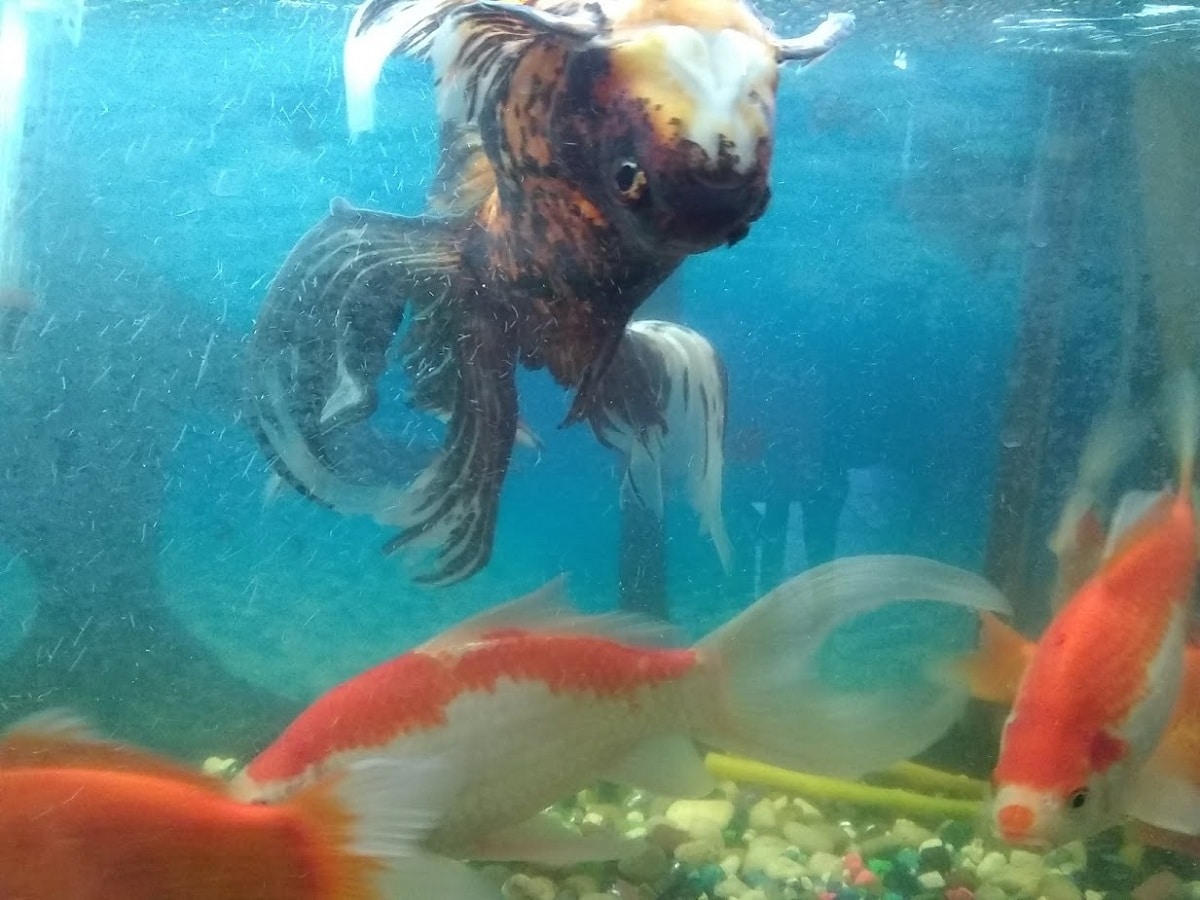
Seeing a fish upside down , floating on its side, or on its back is one of the most worrying sights for any aquarium enthusiast. No, it's not an acrobatic stunt or a game: it's almost always a clear sign that something is wrong with its body and that the fish has lost control of its buoyancy and swimming. On more than one occasion, we've been somewhere and seen aquatic animals looking unwell, swimming (or trying to) upside down, on their backs, or sideways.
Given this situation, it's normal for doubts to arise: what does it mean to see a fish upside down? What should we do? Is it always fatal? We fear there is worrying news, but there is also room for maneuver if we act quickly and understand what is happening inside the fish.
In this article we'll tell you in detail why your fish is upside down , what diseases and problems might be involved, how to differentiate them, what home remedies you can try, and, above all, how to prevent it from happening again in your aquarium.
What does it mean to see a fish upside down?
Basically, when a fish is upside down, it means it has some kind of imbalance or buoyancy problem . In most cases, this issue is related to the swim bladder , although it can also be due to infections, parasites, injuries, or even congenital malformations. All of this means the fish loses control over how it stays afloat.
The swim bladder is a small, gas-filled sac that allows the fish to maintain its position at different depths with minimal energy expenditure. When this organ malfunctions, the fish may float uncontrollably , sink, turn on its side, or end up belly up . For the caretaker, this behavior is often the first sign of a serious health problem.
Although the fish's appearance may be alarming, it's important to remember that it's not always a hopeless case. In the initial stages, and depending on the cause, some fish can partially regain control of their swimming if the correct action is taken and the root of the problem is addressed.
There are several possible causes for this problem, but we're not going to offer too much advice when the fish's life is at stake. Given that there are multiple solutions and each species can react differently, the wisest course of action is to consult a specialist or veterinarian as soon as possible.
With just a few adjustments to the aquarium, proper treatment, and careful observation, you can help the animal. However, it's vital that you act as quickly as possible . Even a simple expert glance can help determine whether it's a temporary stress problem, a severe infection, or irreversible damage.
You should know that fish can develop a number of health problems , some of which are subtle at first but can quickly become serious. If you notice that their lives are in danger, they stop eating, they breathe very rapidly, or they can only swim on their side or back, the most effective course of action is to contact a professional as soon as possible.
Swim bladder disease

When you see a fish swimming upside down, it might seem like it's performing a comedy routine, but it's actually a sign that something is wrong with its swim bladder or nearby organs. Swim bladder disease is one of the most common conditions in aquarium fish and usually manifests with noticeable changes in swimming.
It can be easily diagnosed visually, as the affected fish will begin to swim sideways or upside down . Its belly will be facing upwards, and the fish will constantly struggle to try to right itself. As a result of frequently swimming this way, the animal will collide with decorations, glass, and other fish , since it lacks the same swimming ability and balance.
In these cases, it's important to know that the best course of action is to consult a specialist to treat the fish as soon as possible. However, let's look at some essential aspects of this disease to help the fish as much as possible at home, provided immediate veterinary care isn't available.
We should know that the swim bladder is a membranous, sac-like organ filled with gas. This organ is responsible for the fish's balance, allowing it to float in the water without having to constantly swim . To change depth, the fish fills or empties its swim bladder with gas, thus adjusting its buoyancy with great precision.
When this system is disrupted, the fish may experience several situations: floating on the surface without being able to sink, sinking to the bottom and being unable to surface, or remaining tilted, on its side, or completely upside down . In all these cases, the fish is expending much more energy than usual, which in the medium term can lead to extreme weakness and loss of appetite.
The disease these fish contract is primarily caused by severe neglect of aquarium water conditions . If we don't continuously monitor temperature , cleanliness, pH , oxygen levels , hardness, and organic waste levels, the fish can develop inflammation and infections in their swim bladder.
To a lesser extent, buoyancy problems can be due to congenital or genetic causes . There are species and breeding lines, such as some goldfish with very rounded shapes or globose fish, that have a genetic predisposition to this condition due to their body shape and the pressure exerted by other organs on the swim bladder.
Cases have also been described in which the swim bladder is affected by gastrointestinal parasites (such as those of the genus Hexamita) or by internal bacterial infections , causing inflammation around the organ and impairing its function. In these cases, the fish may exhibit abnormal swimming, a swollen body, loss of appetite, or weight loss, depending on the type of parasite involved.
Consequences of the fish upside down

Swim bladder disease can have various causes, but one of the most serious situations is when it is due to a virus or bacterial infection that causes inflammation and thickening of the tissue surrounding this organ. Because of the presence of this infectious agent, the fish is unable to properly expel gas through its swim bladder.
As a result, the animal remains afloat, unable to maintain its original position or correct its body's rotation. The larger and more painful the swelling of the swim bladder, the less stable the fish will be and the more effort it will have to exert just to try to maintain a minimally functional position.
Some fish, due to their morphology, are more prone to this disease. Those with a very rounded or globose shape are especially susceptible , such as some selectively bred goldfish, tall-bodied carassius, or ornamental varieties with very prominent bellies. In these species, any internal inflammation can more easily compress the swim bladder and cause a sudden shift in the center of gravity.
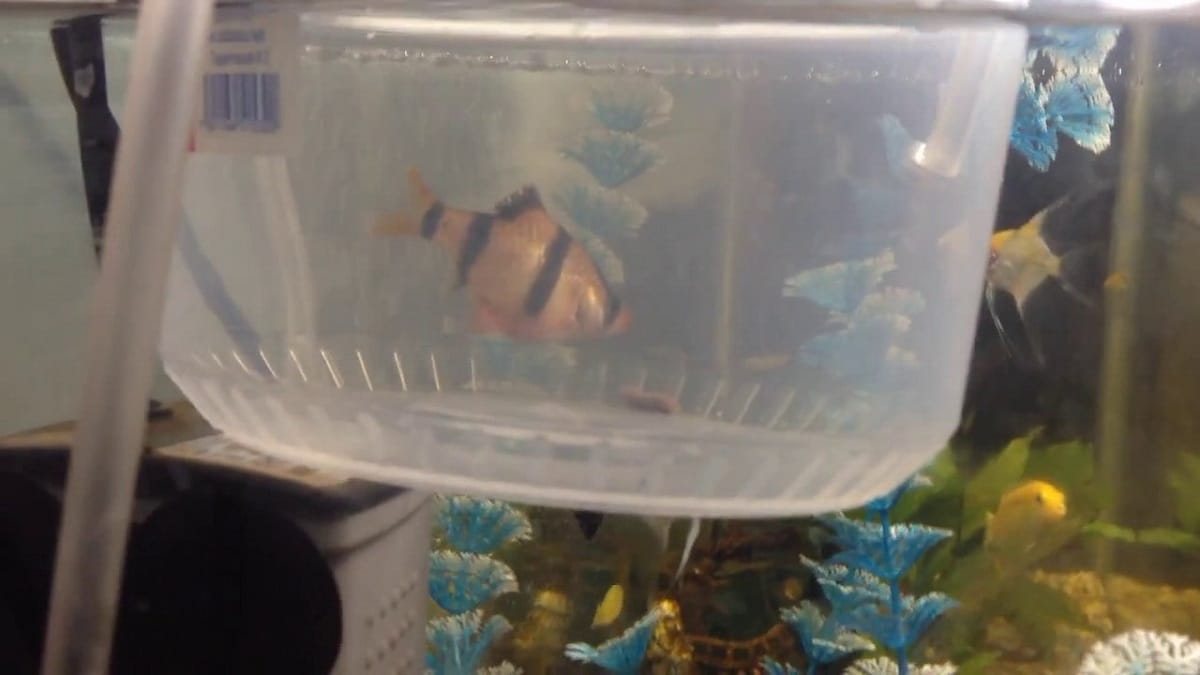
If we detect a fish with swim bladder disease, the first thing we should do is set up a separate aquarium as a quarantine tank . This is where we should place the sick fish so that it doesn't infect the others if it's an infectious problem, and so that we can medicate it in a controlled manner without affecting the other inhabitants of the main tank.
Once the sick fish has been isolated, you should go to a specialized store and purchase a specific treatment for both the main aquarium and the quarantine tank, if recommended by a professional. Broad-spectrum antibiotics or antiparasitic treatments are often used when a bacterial infection or intestinal parasites are suspected as the primary cause. It is essential to always follow the dosage instructions per liter of water and the duration of treatment indicated on the product label.
In addition to medication, it's essential to correct any issues in the main aquarium that may have caused the illness. As mentioned earlier, these could include changes in water quality, dissolved oxygen levels, temperature, or ammonia and nitrite levels. These levels must be monitored regularly, and the proper functioning of all aquarium accessories, such as filters, air pumps, and thermometers, should be checked.
In some cases, when immediate veterinary care is not available, a series of basic care measures can be applied at home, inspired by protocols recommended by aquarium experts:
- Separate the affected fish and transfer it to an aquarium or quarantine container with a low water level, well aerated and dechlorinated.
- Avoid in the quarantine aquarium plants, decorations, or very powerful filters that can hit or drag the weakened fish.
- Change part or all of the water daily from the quarantine container, always with water at the same temperature and properly conditioned.
- If medication is used, dose the drug per liter of water strictly following the manufacturer's instructions.
- Replace only the amount of medication removed during water changes, to avoid overdosing the fish.
- In cases with possible constipation, reduce food intake for a few days and offer small portions of soft plant-based foods, such as pieces of boiled lettuce or peeled and cooked peas.
Once the fish is fully recovered, has regained its balance and appetite, and the water parameters in the main aquarium are stable, we will reintroduce it . This reintroduction should be done gradually, acclimating the temperature and monitoring for any signs of relapse.
Other reasons why a fish might swim sideways or upside down

Although the swim bladder is the main protagonist when we talk de peces Swimming upside down isn't the only possible cause. There are other problems that can also cause the fish to swim upside down. lose coordination or change your swimming pattern:
Gastrointestinal parasites
Fish can suffer from internal parasites , with those of the genus Hexamita being some of the most common in freshwater aquariums. These parasites damage the digestive system and can cause internal inflammation, weight loss, whitish feces, and changes in behavior.
When the infestation is severe, the fish may retract its swim fin and exhibit erratic or sideways swimming for a period of time that can last for days or weeks. With appropriate antiparasitic treatment , recommended by a veterinarian or a specialized pet store, many fish can return to their normal state and resume their usual swimming pattern.
Internal bacterial infections
Another serious cause that can explain why a fish swims sideways or ends up upside down is the presence of a systemic bacterial infection . In these cases, not only is the fish's swimming movement affected, but its life is in danger if action is not taken promptly.
Some signs that may suggest this condition include a swollen body , the appearance of edema or fluid accumulation under the skin, complete loss of appetite, rapid breathing, changes in skin color, or intense lethargy. In the presence of these symptoms, swimming on one's side or back is only one aspect of a more serious illness.
In such cases, broad-spectrum antibiotics are usually necessary, administered in a hospital or quarantine tank, never in the main aquarium if other healthy fish are present. The choice of medication and the duration of treatment should be left to a professional, as misuse of antibiotics can further harm the fish and severely disrupt the aquarium's biological balance.
Sudden temperature changes and stress
Sudden changes in water temperature can also cause temporary buoyancy problems and incoordination. A sudden drop of several degrees can leave the fish disoriented, with clumsy movements or erratic swimming. Similarly, a sudden rise promotes stress, increased metabolism, and the proliferation of unwanted bacteria.
Chronic stress from overcrowding, aggression between fish, noise, banging on the glass, or poor maintenance routines can also weaken the fish's immune system and facilitate the appearance of diseases that then affect the swim bladder.
Species that naturally swim upside down
We must not forget that there are some species de peces that naturally swim upside down, such as certain catfish of the genus Synodontisknown as upside-down catfish. In these cases, swimming upside down is part of their normal behavior and It does not indicate disease.However, these fish are usually acquired consciously, and their particular appearance does not usually surprise the informed hobbyist.
Prevention tasks
Before trying to cure an illness and having to go to a specialized store for treatment, it's best to prevent the problem from occurring in the first place . Generally, fish don't require much individual work or constant attention, but the aquarium itself does need regular care and a certain level of discipline.
If we have the balanced waterwith the levels adjusted and the temperature appropriate for the types de peces that we maintain, both in marine aquariums As in freshwater aquariums, the likelihood of swim bladder problems, infections, and parasites is greatly reduced. Some key prevention points are:
- Control pH, hardness and temperature with the help of specific thermometers and meters.
- Perform regular partial water changesavoiding changes that are too large and abrupt.
- Having a filter suitable for the volume of the aquarium the amount de pecesand keep it clean without completely eliminating the colony of beneficial bacteria.
- Do not overpopulate the aquarium and avoid mixing incompatible species in terms of behavior, size, or water requirements.
- Offer a varied and quality food, without excesses that promote constipation or the accumulation of waste.
Whenever we add a new fish or a new plant, we must quarantine it for a while before adding it to the main aquarium , especially if we have previously had any fish with swim bladder disease or internal infections.
The quarantine period should last between 14 and 21 days , until the fish is behaving normally, shows no signs of illness, and is eating regularly. This simple step drastically reduces the introduction of pathogens into the main aquarium.
Another common recommendation to prevent this disease is to lightly moisten dry food before adding it to the aquarium. It has been shown that dry food that floats for extended periods can cause fish to swallow excess air or suffer intestinal blockages , which can lead to inflammation and buoyancy problems.
In aquariums with species prone to swim bladder disease, many keepers choose to alternate flake food with frozen or fresh foods (such as larvae, brine shrimp, daphnia) and with soft, boiled vegetables to improve intestinal transit. It is always important not to overfeed: it is better to give small portions several times a day than large amounts at once.
It is also essential to use a good or ensure adequate surface agitation of the water so that the fish always have sufficient oxygen . Oxygen-poor water promotes stress, hypoxia, and the development of diseases, some of which end up affecting the swim bladder.
How to act step by step when your fish is upside down

When you spot a fish swimming sideways, upside down, or unable to stay afloat, it's easy to panic. However, following a logical sequence of actions can make all the difference:
- Observe calmlyCheck if the fish is eating, breathing very fast, has a swollen belly, visible wounds, white spots, retracted fins, or discoloration.
- Check the water parametersIt measures temperature, pH, ammonia, nitrites, nitrates and available oxygen, and corrects any out-of-range values.
- Isolate the fish in a quarantine aquarium if the problem is serious or if you suspect a contagious disease.
- Consult a veterinarian or expert In ornamental fish, especially if there is bloating, lack of appetite, or symptoms that worsen rapidly.
- Apply the indicated treatmentwhether antiparasitic, antibiotic or supportive, respecting doses and times.
At the same time, it is advisable to improve the hygiene of the main aquarium, carefully cleaning the bottom, siphoning out leftover food, and checking that the filtration and oxygenation are appropriate for the current population. In many cases, more rigorous maintenance and a more controlled diet are sufficient to prevent recurrence of episodes. de peces upside down.

I hope this information helps you better understand what happens when you see a fish swimming upside down, the most common causes, and what emergency and preventative measures you can take. Maintaining a healthy aquarium with good water quality, a balanced diet , and responsible quarantines is the best way to ensure your fish always swim upright and enjoy a long and active life.

Table of Contents